Headlight glare, wet-road reflections and difficulty judging motorcycles can make driving unsafe even when you can read a bright eye chart. By the end, you will know which symptoms require a temporary break from driving, what a proper examination should include, how often to seek review and what to discuss before cataract surgery.
Key takeaways
- Arrange an eye assessment for glare, halos, faded colours or trouble reading signs.
- Stop driving if vision changes make signs, pedestrians or oncoming headlights difficult to judge.
- Tell the ophthalmologist about night driving, parking ramps and delayed adjustment between light levels.
- Discuss surgery timing, lens options, recovery and driving plans during your consultation.
Which driving problems point to cataract trouble in Mumbai?
Glare from high-beam headlights, halos around lamps, washed-out contrast and difficulty reading street signs are important cataract symptoms while driving in Mumbai. Double vision in one eye, faded colours and delayed adjustment after moving from bright afternoon sunlight into a dim road, parking ramp or vehicle interior also matter.
| Driving clue | Why it matters in Mumbai |
|---|---|
| Headlights or halos | Monsoon spray and wet-road reflections scatter light, making glare and halos obscure lanes, lamps and signs. |
| Washed-out contrast | Poorly lit roads make pedestrians and motorcycles harder to separate from the background. |
| Slow light adjustment | Flyovers, tunnels, parking ramps and vehicle interiors create rapid changes from bright to dim conditions. |
| Sign or distance problems | Dense traffic leaves little time to read signs, judge gaps or identify a road user. |
| One-eye double vision | Persistent doubling can make a single motorcycle, car or lamp appear misplaced. |
Record whether each problem appears in daylight, at dusk, at night, in rain or only when facing oncoming headlights. Note whether it affects one eye or both, and whether spectacles change it.
A reasonable Snellen letter-chart score does not rule out disabling glare or poor contrast. The useful question is not only whether you can read a clinic line, but whether you can detect signs, judge distance and recognise road users in actual traffic. Report these details during a cataract checkup for older drivers in Mumbai.
When should you stop driving and arrange an eye assessment?
Stop driving temporarily and arrange an ophthalmic assessment when a vision problem makes your reactions unpredictable, even if you can still read a clinic chart.
- Glare makes you slow suddenly or hesitate in traffic.
- You miss familiar signs or cannot read them in time.
- Halos obscure headlights, street lamps or traffic signals.
- You misjudge the distance of motorcycles or pedestrians.
- Double vision persists in one eye.
- Vision changes despite clean spectacles and brighter dashboard lighting.
Avoiding night driving alone is not a solution if the same problem appears at dusk, in monsoon rain, inside tunnels, on parking ramps or in daytime low-contrast conditions. These cataract symptoms while driving in Mumbai can also arise from wet-road reflections, poor lighting and rapid changes between sunlight and darkness.
An incorrect spectacle prescription can cause general blur; dry eye tends to fluctuate and sting. Glaucoma can damage peripheral vision, diabetic retinopathy can reduce clarity, and macular disease can distort central vision or straight lines.
Cataract must be confirmed by examining the lens, and the opacity must match the complaint; a much worse result points to another or additional condition. Describe these details to a cataract doctor for elderly in Mumbai rather than assuming ageing is responsible.
Seek urgent assessment for sudden vision loss, severe eye pain, a very red eye, new flashes or floaters, or a curtain-like shadow. Do not wait for a routine cataract appointment or a scheduled review.
What happens during a cataract examination for a senior driver?
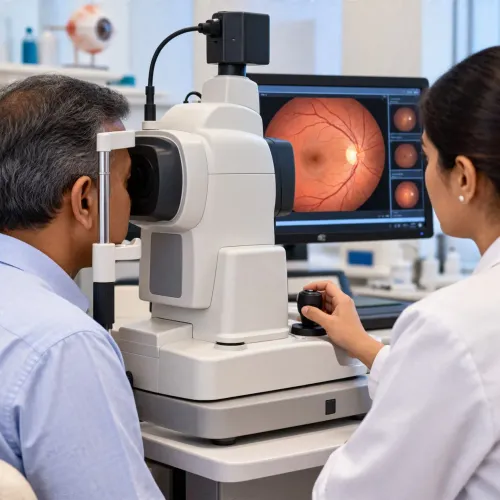
A letter chart alone cannot show how headlight glare, washed-out contrast or delayed adjustment affects driving. A cataract examination for seniors in Mumbai therefore measures vision and checks whether cataract, rather than another eye condition, explains the problem.
Expect these examination components:
- Unaided and best-corrected distance vision, near vision and refraction, which reveal whether a spectacle-power change accounts for the blur.
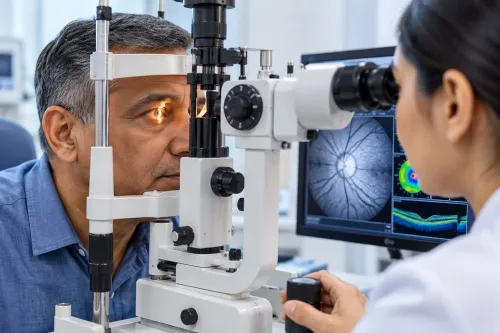
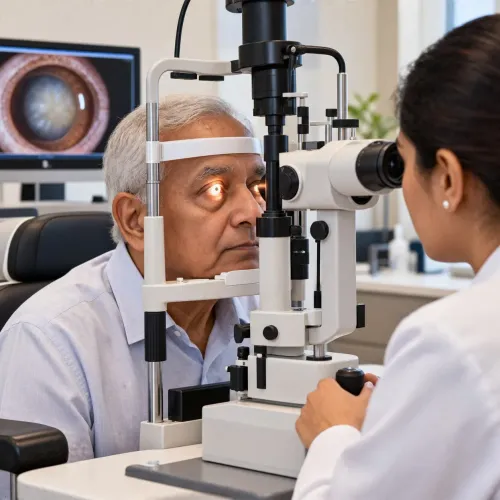
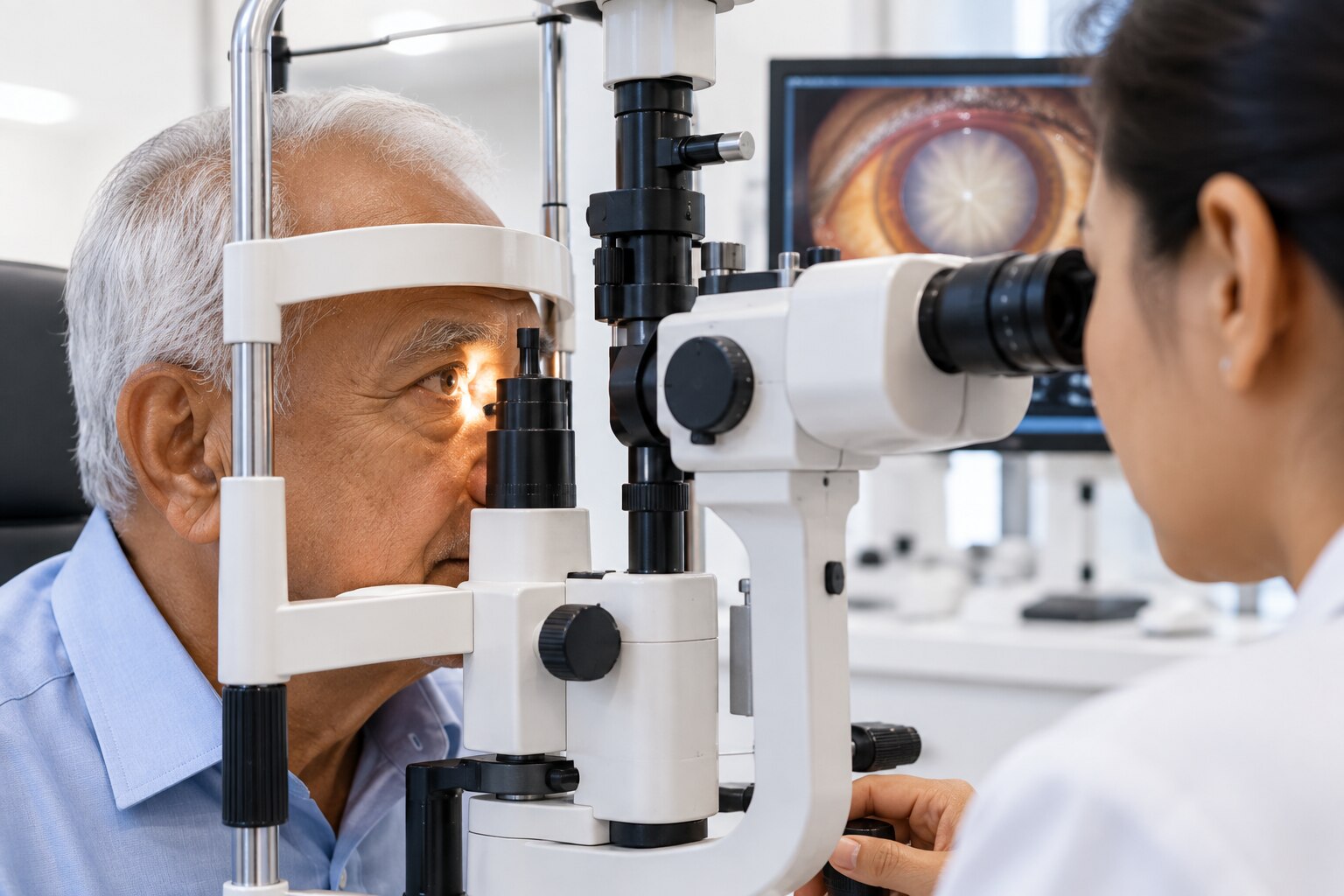
- Slit-lamp examination of the cornea, lens and other front-of-eye structures. The ophthalmologist records the opacity’s location and density and checks whether it matches your glare, contrast loss or blur.
- Pupil assessment and intraocular-pressure measurement to help detect glaucoma or optic-nerve damage.
- Dilated retinal examination to look for diabetic retinopathy, age-related macular degeneration and other retinal disease. Cataract surgery cannot reverse damage in the retina or optic nerve.
For a cataract checkup for older drivers in Mumbai, bring your current spectacles, medication list, previous eye reports and details of diabetes or blood pressure.
Include previous eye operations and describe the driving difficulty precisely: whether symptoms affect one eye or both, occur in sunlight or darkness, and worsen in dry weather or during monsoon conditions. This history helps separate a refractive problem from cataract and coexisting disease.
Dilation can temporarily blur near vision and increase light sensitivity, so arrange transport home.
How often should an older driver repeat the eye check?
Do not put an older driver’s eye review on an automatic timetable. A new functional problem moves the appointment forward, even when the previous examination was reassuring.
Arrange an assessment promptly after:
- New glare, halos or difficulty driving at night
- Double vision in one eye
- Repeated spectacle-power changes
- A noticeable difference in vision between the eyes
- Unsafe driving after a prescription change
- Worsening cataract symptoms
- Diabetes, high blood pressure, glaucoma risk or retinal disease requiring monitoring
After an eye operation, follow the operating ophthalmologist’s schedule rather than waiting for the next routine examination.
Stable vision without a high-risk condition calls for an interval set by the ophthalmologist, based on the lens opacity, retinal findings, eye pressure and your driving demands. A cataract checkup for older drivers in Mumbai should reassess night driving, rain, headlight glare, road-sign reading and contrast, not only the chart score.
A cataract examination for seniors in Mumbai must reflect the conditions you actually face.
| Situation | Review plan | What to discuss |
|---|---|---|
| New glare or unsafe driving | Arrange an earlier assessment | Headlights, rain, signs and contrast |
| Stable findings | Use the ophthalmologist’s interval | Lens, retina, pressure and driving demands |
| After eye surgery | Follow the operating ophthalmologist’s schedule | Recovery and return-to-driving advice |
What should you decide in a cataract surgery consultation?
Surgery becomes a driving decision when cataract symptoms impair safe function, not when you reach a particular age or the lens turns completely opaque.
In a cataract surgery consultation in Mumbai, ask what improvement is realistically due to removing lens blur, glare and reduced contrast, and what may remain because of macular disease, glaucoma, corneal disease or diabetic eye disease.
Decide the intended postoperative focus with the ophthalmologist. Distance suits road signs; intermediate may help dashboards; near supports reading, but choosing one focus can leave another needing spectacles.
| Focus | Practical benefit | Trade-off |
|---|---|---|
| Distance | Driving and outdoor vision | Reading or dashboard glasses may be needed |
| Intermediate | Dashboard and arm’s-length tasks | Distance or near glasses may still be needed |
| Near | Books and close work | Driving glasses will usually be needed |
Before choosing an intraocular lens, confirm corneal curvature and axial length measurements. Prior laser vision correction, very long or short eyes, corneal disease, dry eye or unreliable readings can require repeat scans or a different calculation strategy.
Multifocal or other premium lenses do not guarantee spectacle-free driving; halos and reduced contrast can make night driving harder.
Tell the surgeon about diabetes, hypertension, blood thinners, alpha-blockers for urinary symptoms, previous eye surgery and every medicine. Do not stop treatment without instructions.
A cataract doctor for elderly in Mumbai, including Dr Nusrat Bukhari's Eye Clinic, should explain that this is intraocular surgery, with risks including infection, inflammation, raised pressure, retinal detachment, macular swelling, corneal problems and residual refractive error.
Resume driving only after the operating ophthalmologist confirms recovery and licensing requirements are met; drops, blur, glare and temporary glasses can make early driving unsafe.
Related services
Comprehensive Eye Check-ups Regular eye examinations are essential for maintaining sharp vision and detecting hidden eye problems early. View service → |
Cataract Services by Dr. Nusrat Bukhari Cataracts are one of the most common causes of blurred vision, glare, and reduced clarity—especially with age. View service → |
Frequently asked questions
Which driving problems can point to cataract trouble in Mumbai?
Headlight glare, halos around lamps, washed-out contrast, difficulty reading street signs, faded colours and delayed adjustment between bright and dim areas can indicate cataract-related vision changes. Double vision in one eye also needs assessment.
When should an older driver stop driving and arrange an eye assessment?
Stop driving and arrange an assessment when glare, halos, reduced contrast, double vision or difficulty reading signs affects safe control of the vehicle, especially at night or in dim parking areas.
What happens during a cataract examination for a senior driver?
The ophthalmologist assesses visual clarity and asks how symptoms affect driving, including night glare, sign reading, colour perception and adjustment between light levels. The examination determines whether cataract or another eye condition is affecting vision.
How often should an older driver repeat the eye check?
Repeat the check at the interval advised by your ophthalmologist, and book an earlier assessment if glare, halos, double vision, faded colours or sign-reading difficulty changes.
What should you decide in a cataract surgery consultation in Mumbai?
Discuss whether surgery is appropriate now, how cataracts affect driving, suitable intraocular lens options, expected visual trade-offs, recovery restrictions and when you may safely resume driving.
Keywords