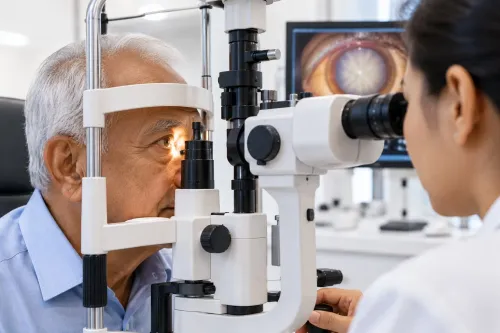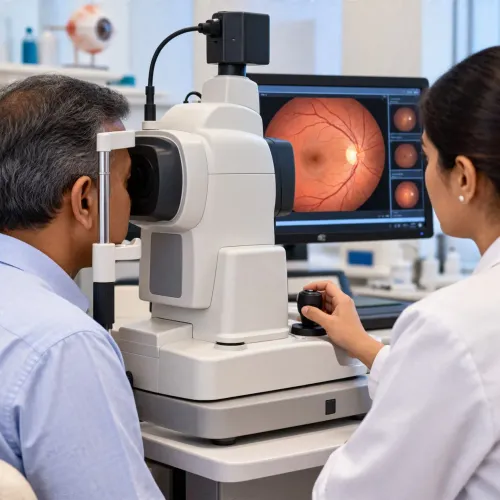
The right appointment depends on whether you need a prescription check, a broader examination for silent disease, or urgent assessment of symptoms such as pain, flashes or sudden vision loss. By the end, you will know which service to book, what the visit may include, how to prepare and which questions to ask a Mumbai eye clinic.
Key takeaways
- Choose an ophthalmologist for pain, sudden vision changes, double vision, or abnormal screening results.
- A complete examination checks eye health, pressure, movements, pupils, retina and vision—not just spectacle power.
- Avoid driving after dilation and bring your current glasses, medicines and relevant medical records.
- Compare specialists by qualifications, diagnostic equipment, emergency access and clear explanations of treatment options.
Should you book a routine check-up or see an ophthalmologist now?
Stable vision, a glasses or contact-lens prescription review, preventive screening and minor concerns without warning signs fit a routine eye check-up. Choose an ophthalmologist consultation in Mumbai for persistent blurred or fluctuating vision, pain, redness, discharge, halos, vision-related headaches, double vision or an abnormal screening result.
| Service | What it covers | Choose it when |
|---|---|---|
| Routine eye check-up | Visual acuity, refraction and basic eye-health screening | Vision is stable and you need preventive care or a prescription review |
| Ophthalmologist consultation in Mumbai | Medical assessment of symptoms, eye disease, injury and treatment needs | Symptoms persist, screening is abnormal or refraction cannot explain the problem |
| Urgent eye assessment | Immediate evaluation of potentially sight-threatening conditions | Sudden vision loss, a curtain-like shadow, a sudden shower of flashes or floaters, severe pain with nausea, marked redness with reduced vision, chemical injury or penetrating trauma |
Contact-lens users with pain, light sensitivity, discharge or worsening redness should remove their lenses and seek prompt ophthalmic assessment, not wait for refraction; a corneal infection can worsen while the lens remains in place. Do not wait for a routine booking for urgent symptoms.
For a vision problem consultation in Mumbai, explain when symptoms began, whether one or both eyes are affected, and whether vision changes after blinking or removing lenses. A general ophthalmologist assesses most complaints; retinal, glaucoma, corneal, paediatric, squint, neuro-ophthalmology or oculoplastic findings may require referral.
What does a complete eye examination include beyond a spectacle-power test?
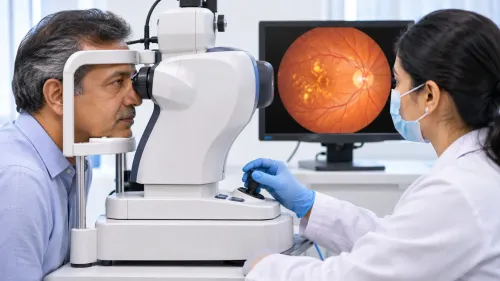
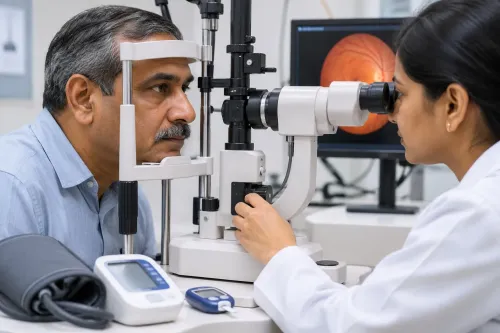
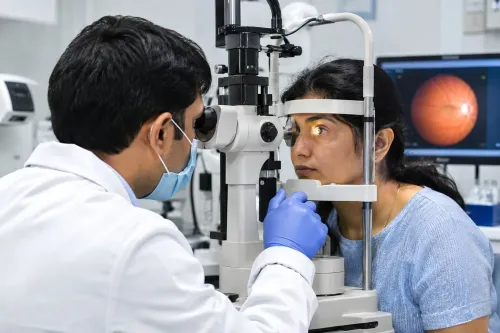
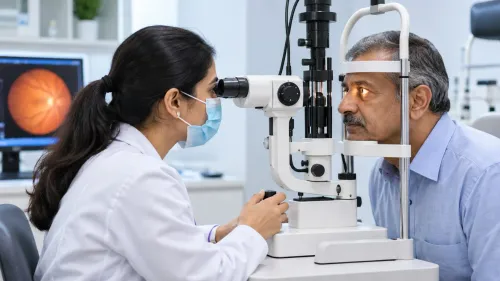
A complete eye examination in Mumbai examines eye health, not just the numbers needed for spectacles. A basic test measures distance and near visual acuity, then uses subjective or automated refraction to calculate a prescription. A medical examination also assesses the pupils, eye movements, alignment, cornea, conjunctiva, lens, optic nerve, retina and eye pressure.
Refraction alone can miss glaucoma, diabetic retinopathy, retinal disease and optic-nerve disorders because early vision may remain clear.
| Service | What it covers | When it fits |
|---|---|---|
| Routine eye check-up | Visual-acuity chart, refraction and basic eye-health screening | Stable vision, prescription review or preventive care |
| Ophthalmologist consultation | Medical examination, including slit-lamp assessment, eye pressure and retinal evaluation | Symptoms, abnormal screening, diabetes, injury or suspected disease |
| Targeted testing | Dilated retinal examination, visual-field testing or optical coherence tomography | Findings, symptoms or risk factors that require closer assessment |
Choosing an eye checkup or specialist consultation in Mumbai means asking what the appointment actually includes:
- Ask whether an ophthalmologist performs the examination and whether dilation is available when indicated.
- Ask whether the fee includes intraocular-pressure measurement, retinal assessment, visual fields or OCT. These investigations may be billed separately.
- Do not treat a normal pressure reading as proof that you do not have glaucoma; optic-nerve appearance, visual fields and retinal-nerve imaging also guide assessment.
When is dilation useful, and how should you prepare for the appointment?
Dilation lets the clinician inspect the peripheral retina, macula and optic nerve through a wider pupil. It is especially useful if you have diabetes, flashes or floaters, reduced vision, a family history of glaucoma, a new eye complaint, or an age-related risk of retinal or lens disease.
1. Expect blurred near vision and light sensitivity for several hours after the drops. The duration depends on the drops used, your pupils and your response. Bring sunglasses, avoid work requiring sharp near vision immediately afterward, and arrange a driver if your vision remains blurred or light-sensitive. Do not drive until you can see safely.
2. Before refraction, ask whether you must remove contact lenses and for how long. The answer depends on the lens type and whether your cornea needs time to return to its natural shape. Bring your current spectacles, contact-lens details, every medication and dose, previous eye reports and the date of your last examination.
3. Tell the clinician about diabetes, hypertension, pregnancy, previous eye injuries or surgery, and a family history of glaucoma. These details affect test selection and urgency during a complete eye examination in Mumbai or a vision problem consultation in Mumbai. Ask whether dilation, OCT, visual fields and other investigations are included in the quoted fee.
Which age or health risks make specialist review more important?
Children need more than an adult spectacle check when they have a turned eye, abnormal head posture, reading difficulty or trouble seeing the board. Assessment should include visual acuity, alignment, eye movements, refractive error and amblyopia risk; delaying care can limit visual development.
| Age or risk | Review schedule or trigger | Why specialist assessment matters |
|---|---|---|
| Children | Around 6 months, again at 3 years and before school; sooner for concerning signs or strong family history | Detects alignment problems, refractive error and amblyopia |
| Adults without symptoms | Baseline around 40; every 2–4 years from 40–54, 1–3 years from 55–64, and 1–2 years from 65 onward | Finds disease before blurry vision, with intervals adjusted for findings and risk |
| Contact-lens users | Scheduled eye-health reviews as directed; prompt review for pain, redness or discharge | Lens-related infection or corneal injury can worsen without treatment |
| Diabetes | Type 2: at diagnosis; type 1: within 5 years; pre-existing diabetes in pregnancy: first trimester, then clinician-directed follow-up | Retinal disease can begin while vision remains normal |
Hypertension, family history of glaucoma and cataract symptoms in an older adult favour an ophthalmologist consultation in Mumbai over refraction alone. A clinician can decide whether you need dilation, eye-pressure measurement, retinal imaging or visual-field testing.
If you search for an eye specialist near me, match the service to your risk rather than distance alone. Bring previous reports, current glasses or lenses, medicines and relevant medical history.
How can you compare an eye specialist near you in Mumbai?
Choose an eye specialist near me by matching the clinician to your problem, not by distance or the advertised consultation price alone. For a routine prescription review, confirm that refraction is provided. For symptoms, diabetes, glaucoma risk, flashes, cataract symptoms or an abnormal screening result, ask whether an ophthalmologist performs the medical examination.
| Service | What it covers | When it fits |
|---|---|---|
| Routine prescription review | Visual acuity and refraction | Stable vision or a glasses update |
| Medical eye examination | Eye movements, eye pressure and retinal assessment, with dilation when indicated | Symptoms, diabetes, glaucoma risk or abnormal screening |
| Specialist assessment | Additional investigations and treatment planning | Persistent findings or suspected retinal, glaucoma, corneal or paediatric disease |
Ask whether the clinic can arrange visual-field testing or optical coherence tomography when clinically necessary. Refraction alone can miss glaucoma, diabetic retinopathy and retinal or optic-nerve disease.
Before booking an eye checkup or specialist consultation in Mumbai, ask:
- What does the first fee include?
- Are dilation, imaging and visual fields billed separately?
- Will you need a driver after dilation?
- How are results and follow-up handled?
- Is retinal, glaucoma, corneal or paediatric referral available if required?
Dr Nusrat Bukhari's Eye Clinic can be considered when you want these questions addressed in a specialist eye-care setting in Mumbai. The useful comparison is not the label but the clinician’s qualification, examination scope, necessary tests and clear next step; that distinction also separates a basic visit from an ophthalmologist consultation in Mumbai.
Related service
Other Ophthalmic Services by Dr. Nusrat Bukhari Dr. Nusrat Bukhari offers a wide range of additional ophthalmic services designed to support complete eye health and enhance... View service → |
Frequently asked questions
Should you book a routine eye check-up or see an ophthalmologist now?
Book a routine check-up when your vision is stable and you need preventive screening or a prescription review. Arrange an ophthalmologist consultation for persistent blurred or fluctuating vision, pain, redness, discharge, halos, vision-related headaches, double vision or an abnormal screening result. Seek urgent care for sudden vision loss, severe eye pain, new flashes with many floaters or a curtain-like shadow.
What does a complete eye examination include beyond a spectacle-power test?
It can include visual acuity, refraction, pupil responses, eye-movement testing, slit-lamp examination, intraocular-pressure measurement and a retinal examination. The clinician may add visual-field testing, corneal measurements, optical coherence tomography or fundus photography when symptoms or risk factors justify them.
When is dilation useful, and how should you prepare for the appointment?
Dilation helps the ophthalmologist inspect the retina and optic nerve through a widened pupil, especially when symptoms, diabetes, high myopia or other risks are present. Bring your glasses, contact-lens details, medicines and medical records. Expect temporary light sensitivity and blurred near vision, and arrange transport if driving feels unsafe afterward.
Which age or health risks make specialist review more important?
Specialist review becomes more important with diabetes, high blood pressure, glaucoma in the family, high myopia, previous eye injury or surgery, steroid use, pregnancy-related visual symptoms and increasing age. Children with squinting, frequent headaches, reading difficulty or one eye turning need assessment rather than only a glasses-power check.
How can you compare an eye specialist near you in Mumbai?
Check the ophthalmologist’s qualifications and relevant subspecialty, the clinic’s diagnostic equipment, appointment availability, emergency instructions, accessibility and follow-up process. Ask what the examination includes, whether dilation is planned, which tests cost extra and how the doctor will explain treatment choices.
Keywords