Changing vision in later life is not automatically a cataract: gradual haze and glare follow a different pattern from sudden loss, flashes, severe pain or a curtain-like shadow. By the end, you will know when to seek same-day care, what a proper evaluation checks, how to prepare for a Mumbai appointment and when surgery is considered.
Key takeaways
- Seek urgent care for sudden vision loss, severe eye pain, flashes, or a curtain-like shadow.
- Bring current glasses, medicines, medical records, and a list of vision problems.
- A cataract needs surgery when vision limits reading, driving, walking, or daily independence.
- Ask about lens options, risks, recovery, fees, and follow-up before choosing a surgeon.
Which changing-vision symptoms suggest a cataract, and which need urgent care?
A cataract usually develops gradually and painlessly. Common cataract symptoms in seniors include hazy vision, faded colours, reduced contrast, difficulty reading and frequent changes in spectacle prescription. Headlights may produce disabling glare, halos around lights can appear, and poor night vision can make driving or walking unsafe.
| Pattern | Typical clues | What to do |
|---|---|---|
| Gradual change | Hazy vision, faded colours, reduced contrast, reading difficulty, frequent spectacle changes, headlight glare, halos or poor night vision | Book a routine eye assessment soon after the change persists |
| Same-day warning | Sudden or rapidly worsening vision loss, flashes, a shower of new floaters, or a curtain-like shadow | Seek emergency eye care the same day |
| Same-day warning | Severe eye pain, marked redness, severe headache with nausea, or new double vision | Seek emergency eye care the same day |
Do not blame a red-flag symptom on an existing cataract. A cataract does not explain every change in an older eye; sudden floaters and a curtain-like shadow can signal a retinal tear or detachment, while pain, redness or nausea can indicate a sight-threatening pressure or inflammation problem.
If the change is gradual, arrange a cataract check rather than waiting for the lens to become “ripe”. Go to an emergency eye service the same day for any warning sign, especially if vision worsens over hours or one eye is affected.
What happens during a cataract checkup in Mumbai?
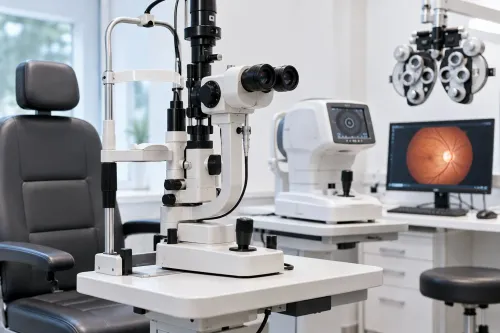
A cataract checkup in Mumbai is a sequence of tests, not just a letter chart. The clinician records your symptoms and then checks how clearly you see at different distances, whether glasses improve the image, and whether another eye problem explains the change.
- Distance visual-acuity testing with each eye covered in turn
- Near visual-acuity testing for reading-sized print
- Refraction to measure the spectacle power that gives your clearest vision
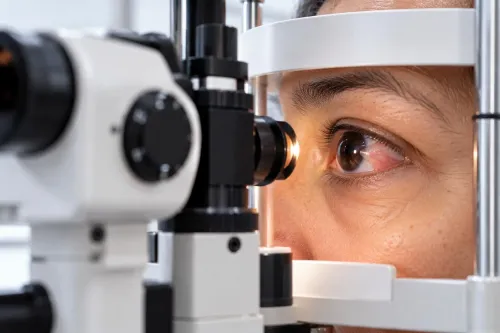
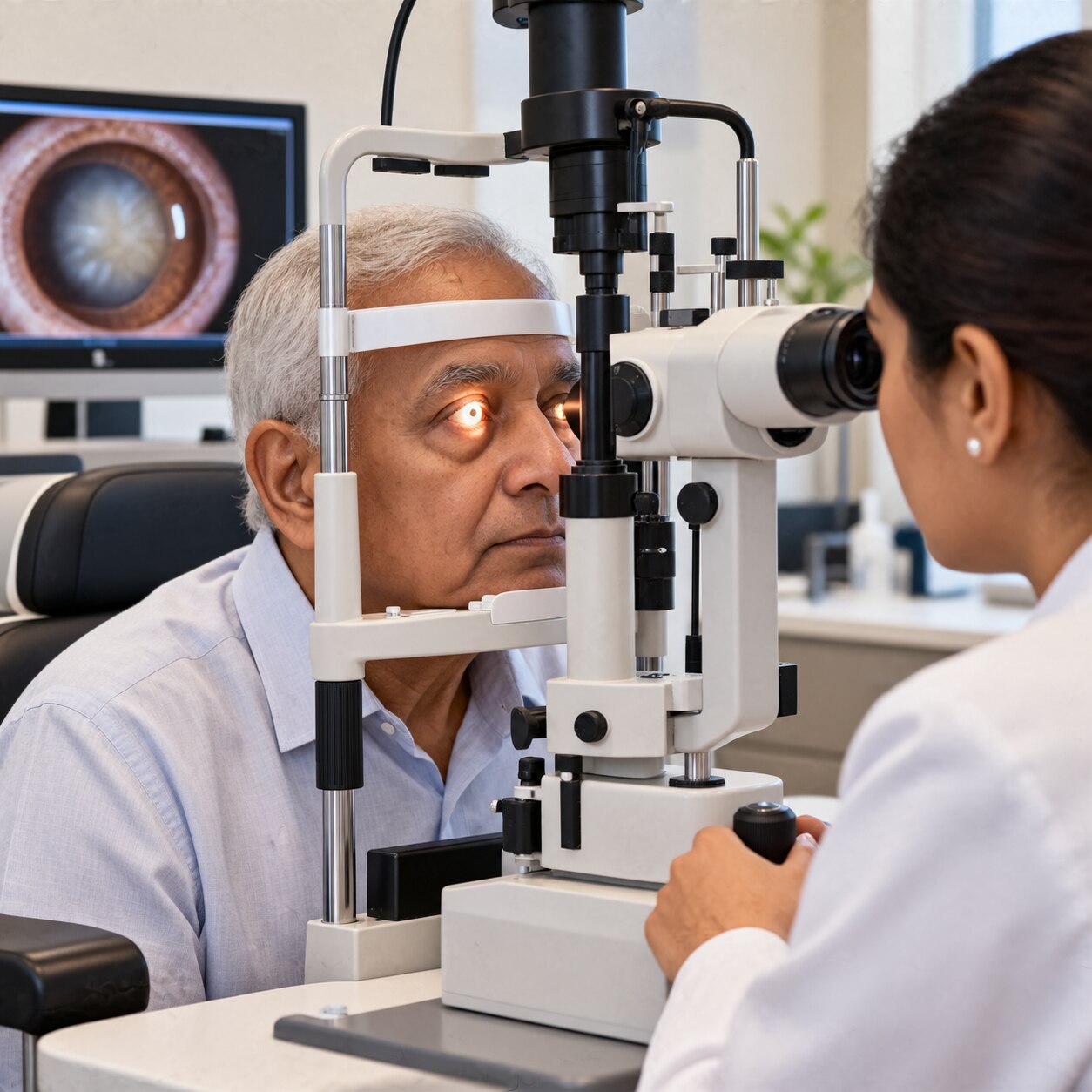
- Slit-lamp examination of the cornea, iris and lens for cataract or corneal disease
- Intraocular-pressure measurement with tonometry
- Dilated examination of the retina, macula and optic nerve
Dilation matters when vision has changed noticeably or cataract surgery is being considered. It lets the clinician look for retinal damage, macular disease and optic-nerve changes that a cloudy lens could otherwise hide.
If a dense cataract blocks a view of the back of the eye, B-scan ultrasound can assess the retina and other structures before treatment.
The clinician also tests whether the cataract is truly causing your limitation. The findings are compared with possible glaucoma, diabetic retinopathy or macular oedema, macular degeneration, corneal disease and uncorrected refractive error. A medication effect belongs in the review too, so provide the complete medicine list.
If removing the cataract would not address damage in the retina or optic nerve, the expected improvement needs a different explanation. Ask which documented finding supports the cataract as the main cause.
How should a senior prepare for the appointment, and how much time will it take?
Bring your records and plan a half-day rather than treating this as a quick letter-chart visit. The examination may include repeated vision tests, dilation and additional measurements.
1. Pack your current spectacles, previous eye reports, surgical records and recent diabetes or blood-pressure information. Carry a complete medication list with doses, including tamsulosin and medicines that affect bleeding risk, such as aspirin, clopidogrel or warfarin. Do not stop any medicine unless the prescribing clinician tells you to.
2. Tell the clinician about prior eye surgery, glaucoma, dry eye, corneal problems and any change in daily function. Mention difficulty reading, walking, recognising faces, cooking, using a phone or managing independently; these details help link the examination findings to your real-life limitation.
3. Allow time for repeated tests. Dilation can blur near vision and increase light sensitivity for several hours, so carry sunglasses and arrange a family member or driver if reading instructions, using public transport or driving home will be difficult.
4. Ask how long the visit will take before travelling across Mumbai, especially if you need assistance with stairs, traffic or long waits. Ask whether biometry—the measurement used to calculate an artificial-lens power—will be completed that day or requires a return visit.
Optical biometry can be delayed when the cataract is dense, the measurements are inconsistent or further eye-surface treatment is needed.
When does a cataract justify surgery, and what should planning include?
Surgery becomes relevant when cataract-related vision loss disrupts reading, walking, cooking, recognising faces, work, driving or independent daily activities. You do not need to wait for a cataract to become “ripe”, and no single visual-acuity number decides the timing.
Examination findings must show that the cataract is the likely cause and that removing it offers a worthwhile benefit.
Planning should cover:
- Optical biometry, which measures eye length and other dimensions to calculate intraocular-lens power. Use ultrasound biometry when a very dense cataract prevents reliable optical measurement.
- Dry eye, corneal irregularity and unusual eye anatomy, because inaccurate measurements or an unstable ocular surface can leave you with an unexpected spectacle prescription after technically successful surgery.
- Your visual priorities: distance glasses, reading glasses, reduced dependence on spectacles, contrast quality and night driving.
- Surgical risks, including infection, retinal detachment, raised eye pressure, inflammation, corneal swelling and an inaccurate refractive result. Posterior-capsule clouding can occur months or years later and is usually treated with a YAG laser procedure, not repeat cataract extraction.
Compare lens choices against your daily needs:
| Option | Potential benefit | Main trade-offs |
|---|---|---|
| Monofocal | Clear focus at one chosen distance | Glasses usually needed for other distances |
| Multifocal | More spectacle-free distances | Halos, glare and reduced contrast |
| Trifocal | Distance, intermediate and near focus | Halos and night-vision difficulties |
| Extended-depth-of-focus | Broader distance range | Near vision may remain limited; glare can occur |
Multifocal, trifocal and extended-depth-of-focus lenses deserve caution with corneal irregularity, macular disease, glaucoma or demanding night driving.
What should you ask during a cataract surgeon consultation in Mumbai?
Ask six questions before agreeing to surgery, and expect evidence-based answers rather than a decision based on lens appearance alone.
For a cataract evaluation for seniors in Mumbai, ask the surgeon to review documented distance and near acuity, refraction, slit-lamp findings, eye pressure and a dilated retinal and optic-nerve examination. If surgery is planned, biometry should guide the implant power; a dense cataract may require ultrasound to assess the back of the eye.
- What finding proves the cataract is causing my limitation?
- If the cataract is removed, what could still limit my vision?
- Do my retina, optic nerve, cornea or diabetes change the expected result?
- Which distance will the implant target?
- Will I still need reading or distance glasses?
- What follow-up and warning symptoms require urgent contact?
| Implant approach | Main target | Questions to clarify |
|---|---|---|
| Monofocal | One chosen distance | Which glasses will I need afterward? |
| Multifocal or trifocal | Several distances | How might halos, glare and contrast affect night driving? |
| Extended-depth-of-focus | Distance with some intermediate range | Will reading glasses still be necessary? |
| Monovision | One eye near, one eye distance | Will adaptation or reduced depth perception affect me? |
A cataract surgeon consultation in Mumbai should also cover diabetes, macular disease, glaucoma and corneal problems, because removing the lens cannot reverse established damage. Dr Nusrat Bukhari's Eye Clinic is one local option for arranging this discussion; compare the clarity of the evaluation, alternatives and follow-up plan, not the presence of a cataract alone.
Related services
Comprehensive Eye Check-ups Regular eye examinations are essential for maintaining sharp vision and detecting hidden eye problems early. View service → |
Cataract Services by Dr. Nusrat Bukhari Cataracts are one of the most common causes of blurred vision, glare, and reduced clarity—especially with age. View service → |
Frequently asked questions
Which cataract symptoms in seniors need urgent care?
A gradual haze, glare, faded colours, poor night vision, and frequent prescription changes fit cataract symptoms. Sudden vision loss, severe eye pain, marked redness, new flashes, many floaters, or a curtain-like shadow need urgent assessment because they can signal another eye emergency.
What happens during a cataract checkup in Mumbai?
The clinician checks visual acuity, eye pressure, the front of each eye, and the retina after dilating the pupils. They assess whether a cataract explains your symptoms and look for conditions such as glaucoma, diabetic eye disease, or macular problems.
How should a senior prepare for a cataract evaluation?
Bring your glasses, medication list, medical records, previous eye-test reports, and details of diabetes or other health conditions. Arrange transport if your pupils will be dilated, since blurred near vision and light sensitivity can last for several hours.
When does a cataract justify surgery?
Surgery becomes reasonable when the cataract interferes with reading, work, driving, walking, hobbies, or independence and the expected benefit outweighs the risks. Planning includes measurements for the intraocular lens, a review of eye and general health, medication instructions, transport, and postoperative follow-up.
What should you ask during a cataract surgeon consultation in Mumbai?
Ask whether the cataract is the main cause of your symptoms, which lens choices suit your eyes and activities, what vision is realistic, and what complications are possible. Confirm the surgeon's experience, facility arrangements, total fees, recovery limits, warning signs, and follow-up schedule.
Keywords