Sudden vision loss, a painful red eye, chemical exposure or a new curtain-like shadow needs a different response from a stable change in spectacle power. Use the symptom, its speed of onset and the injury mechanism to decide between emergency care, same-day assessment and a scheduled appointment, then prepare safely for the right service.
Key takeaways
- Seek immediate care for sudden vision loss, chemical exposure or a penetrating eye injury.
- Rinse chemical splashes with clean water for at least 20 minutes.
- Contact-lens wearers need faster assessment for pain, redness or light sensitivity.
- Bring medication details, contact lenses and injury timing to same-day eye care.
Which eye symptoms need emergency, same-day or routine care?
Use this three-level guide when choosing an emergency eye clinic or regular appointment in Mumbai:
| Level | Choose it for | What to do |
|---|---|---|
| Emergency now | Sudden vision loss; a cut or penetrating eye injury; chemical exposure; severe pain with headache, nausea, vomiting or halos; a red eye with reduced vision; new double vision; sudden pupil changes; or flashes and many new floaters with a curtain or missing area of vision | Seek immediate ophthalmic or hospital care. If vision loss comes with sudden weakness, facial droop, speech difficulty or a severe sudden headache, call 112 rather than travelling independently |
| Same-day assessment | A painful red eye; marked light sensitivity; suspected corneal abrasion; persistent foreign-body sensation; new discharge; or a sudden but non-severe visual change | Arrange same day eye care in Mumbai. Do not wait for a routine slot |
| Regular appointment | Gradually changing spectacle power; longstanding mild dry-eye symptoms; an unchanged eyelid lump; or planned glaucoma or diabetes follow-up without new warning symptoms | Book routine care if the problem remains stable and painless |
Mild pain or apparently clear vision does not rule out retinal, corneal, optic-nerve or pressure-related disease. A retinal tear, early corneal injury, optic-nerve problem or dangerously raised eye pressure can begin without dramatic surface changes. A new shadow, field defect or visual difference deserves examination even when the eye looks normal.
What should you do before reaching eye care after an injury?
Start first aid immediately; do not delay irrigation while searching for urgent eye problem treatment in Mumbai. After a chemical splash, hold the eye open and rinse continuously with clean running water or saline for at least 20 minutes.
Remove contact lenses while rinsing if they come out easily, and take the chemical container or its name with you.
- Do not rub the eye, press on it, use leftover prescription or steroid drops, or apply topical anaesthetic drops.
- Do not remove an embedded object or cover the eye with a pressure patch.
- Place a rigid protective shield over a suspected penetrating injury without pressing on the globe.
- Go to an emergency department or specialist eye service for a high-velocity metal injury, cut or penetration, major facial trauma, loss of consciousness, suspected orbital fracture or severe blunt trauma.
- Use 112 for vision loss with weakness, numbness, facial droop, speech difficulty or another neurological symptom.
Do not drive after an injury. Arrange transport when pain, impaired vision or pupil dilation makes travel unsafe. A nearby clinic is suitable only if it can assess serious trauma and arrange urgent imaging, surgery or hospital admission; do not substitute a routine appointment for emergency assessment.
How do contact-lens wearers, children and high-risk patients change the decision?
Contact-lens wearers, children and people with diabetes or high blood pressure need same-day eye care in Mumbai at a lower threshold than other patients.
| Person | Warning signs | Decision |
|---|---|---|
| Contact-lens wearer | Pain, redness, light sensitivity, discharge or reduced vision | Remove the lens, stop wearing lenses and obtain same-day examination. Microbial keratitis can progress quickly; leftover drops are not a safe substitute. |
| Child | Chemical splash, penetrating injury, painful red eye, new vision difference, unequal pupils, double vision or persistent light sensitivity | Arrange urgent assessment. Watch for squinting, covering one eye, stumbling or refusing light because children may not describe lost vision clearly. |
| Diabetes or high blood pressure | Sudden floaters, a shadow, reduced vision or eye pain | Do not wait for a planned screening appointment; seek urgent assessment. |
| Blunt-trauma patient taking warfarin, apixaban, rivaroxaban, aspirin or another blood thinner | Any new eye symptom after the injury | Tell the clinician, because bleeding risk affects triage. |
Fever, facial swelling, pain with eye movement, restricted eye movement, double vision or a protruding eye needs hospital assessment for possible orbital cellulitis. This infection can require imaging, intravenous antibiotics, admission or surgical drainage.
Do not drive yourself if vision is impaired. Contact-lens symptoms with reduced vision, or a child who cannot see normally, deserve prompt examination even when the eye surface looks mild.
How do you compare an emergency eye doctor or eye injury clinic near me?
Choose the service that can assess the suspected injury, not simply the one closest to you. An emergency eye doctor in Mumbai is appropriate for prompt symptoms that do not clearly require a trauma emergency department, provided the clinic has the right equipment and referral network.
| Option | Check before choosing | When it applies |
|---|---|---|
| Walk-in eye clinic | Accepts walk-ins and after-hours cases; performs slit-lamp examination and eye-pressure testing | New pain, redness, light sensitivity or a possible surface injury |
| Eye injury service | Handles chemical injuries, blunt trauma and penetrating trauma; offers dilated retinal assessment | An object entered the eye, vision is reduced, or trauma may affect the retina |
| Specialist eye clinic | Can arrange urgent surgery, CT imaging or hospital admission | Suspected intraocular foreign body, orbital fracture or serious internal injury |
| Hospital emergency department | Manages major facial trauma, neurological symptoms and admission | Cut or penetrated globe, suspected orbital fracture, facial injury or weakness, speech difficulty or severe headache |
Check travel time before choosing a distant clinic. Call ahead when the symptom is new, vision is reduced, an object entered the eye, or dilation may be needed.
An eye injury clinic near me is suitable only if it can investigate the suspected injury, rather than treating minor surface cuts. Dr Nusrat Bukhari's Eye Clinic can be considered alongside these checks when arranging urgent ophthalmic assessment in Mumbai.
For major trauma or neurological symptoms, choose a hospital emergency department instead of assuming proximity is enough.
Related service
Glaucoma Screening & Management Glaucoma Screening & Management Glaucoma is a silent, progressive eye condition that can cause irreversible vision loss if not detected early. View service → |
What happens during same-day assessment, and what should you bring?
At triage, same-day eye care in Mumbai begins with questions about when symptoms started, how the injury happened, pain, changes in vision and your medication history. The clinician then decides whether you need urgent treatment, referral or a regular follow-up; every red eye does not require the same investigation.
Bring:
- Medication names and doses, including blood thinners and eye drops.
- Your contact-lens brand, when you last wore the lenses and how long you wear them.
- The chemical container or a clear photograph of its label after a splash.
- Previous eye records, prescriptions and your glasses.
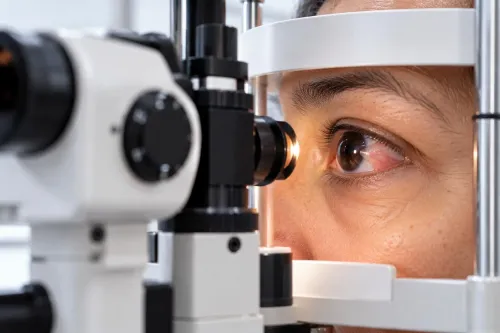
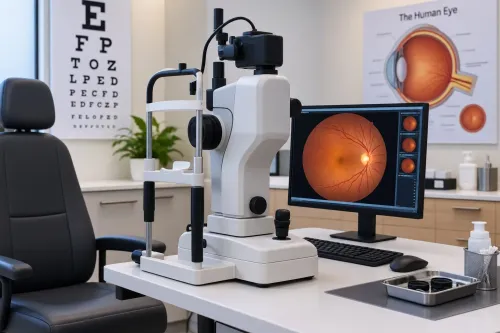
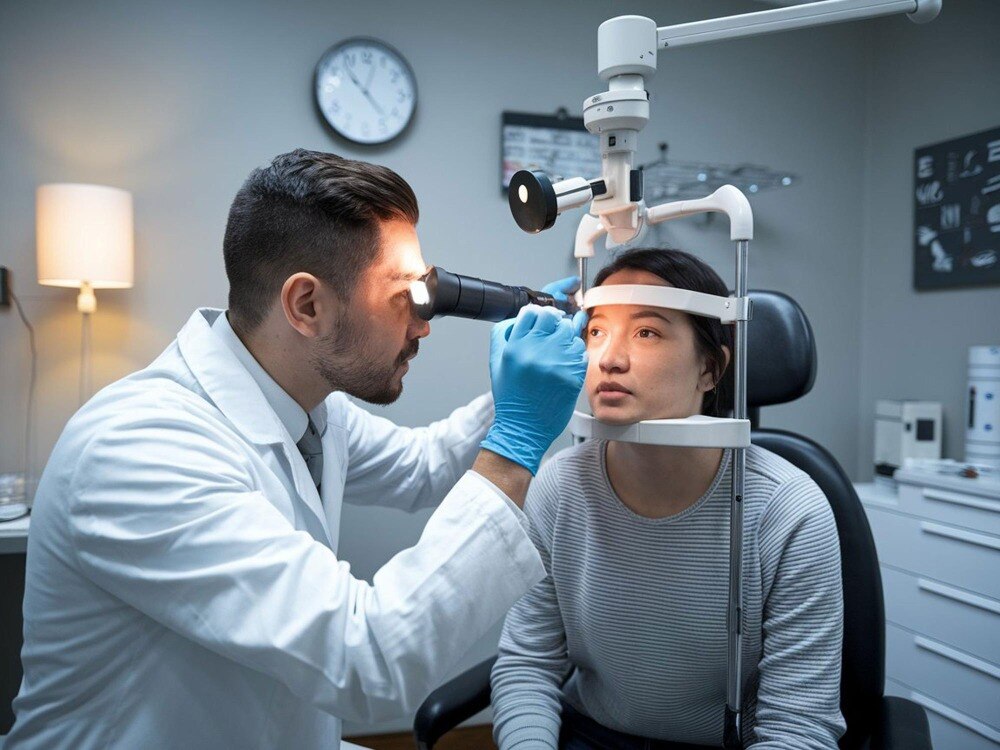
The examination may include visual-acuity testing, pupil inspection, slit-lamp examination, intraocular-pressure measurement and fluorescein dye to reveal a corneal defect. If symptoms suggest retinal or optic-nerve disease, the clinician may dilate your pupils to inspect the retina. Suspected orbital fracture or an intraocular foreign body may require CT imaging or hospital referral.
Arrange transport for urgent eye problem treatment in Mumbai. Dilation can blur near vision and increase light sensitivity, so do not drive yourself after the examination if your vision remains impaired. Bring someone with you if pain, blurred vision or injury makes travel difficult.
Frequently asked questions
Which eye symptoms need emergency, same-day or routine care?
Seek emergency eye care for sudden vision loss, severe eye pain, a chemical splash, a penetrating injury, a new curtain-like shadow, or flashes with many new floaters. Arrange same-day care for painful red eyes, worsening blurred vision, light sensitivity, discharge, or an injury that does not improve. Book a routine appointment for stable symptoms such as gradual reading difficulty or long-standing, unchanged floaters.
What should you do before reaching an eye injury clinic?
For a chemical splash, hold the eyelids open and rinse with clean, lukewarm running water for at least 20 minutes. Do not rub the eye, remove an embedded object, apply leftover drops, or use tweezers. For a blunt injury, use a cool compress without pressure and seek assessment for pain or vision changes.
How do contact-lens wearers and children change the decision?
Remove a contact lens if it comes out easily, then keep it in its case and do not wear another lens. Pain, redness, discharge or light sensitivity in a lens wearer needs same-day assessment because corneal infection can worsen quickly. Children need prompt review when they have reduced vision, significant swelling, a chemical exposure, or an injury they cannot describe clearly.
How do you compare an emergency eye doctor or eye injury clinic near me?
Choose a clinic that provides same-day ophthalmic assessment, slit-lamp examination, eye-pressure measurement and referral for imaging or surgery when needed. Confirm opening hours, location, emergency contact instructions and whether the clinician treats chemical, blunt and penetrating injuries.
What happens during same-day eye care, and what should you bring?
The clinician records how and when symptoms began, checks visual acuity, examines the cornea and eyelids with a slit lamp, and measures eye pressure when appropriate. Bring your glasses, contact-lens case, medication list, allergy details, injury photographs and the chemical container or product name.
Keywords