A pressure reading is useful, but it cannot confirm or exclude glaucoma on its own. You will learn which tests belong in a complete assessment, how to prepare, when results need repeating, and which symptoms require urgent care instead of routine screening.
Key takeaways
- Book screening from age 40, earlier with family history or diabetes.
- A normal eye-pressure reading does not rule out glaucoma.
- Expect optic-nerve imaging, visual-field testing, and a dilated examination.
- Urgent care is needed for severe eye pain, halos, nausea, or sudden vision loss.
Who should book screening, and when is it urgent?
Glaucoma can damage peripheral vision without pain, redness, or reading difficulty. Do not wait for blurred vision: a normal eye-pressure reading also does not exclude normal-tension glaucoma. Screening is a risk assessment, not a diagnosis based on tonometry alone.
Book earlier or repeated assessment if you have:
- Increasing age, especially alongside another risk factor
- A parent, sibling, or child with glaucoma
- Diabetes, marked short-sightedness, or marked long-sightedness
- A previous eye injury or eye surgery
- Prolonged or repeated corticosteroid use, including steroid eye drops, tablets, inhalers, or creams
- Sleep-apnoea concerns or a history of migraine that your eye specialist needs to consider
These factors raise concern but do not prove disease. Ask for a complete glaucoma evaluation with optic-nerve examination, gonioscopy when indicated, visual-field testing, and imaging rather than an eye-pressure test alone. If you are searching for glaucoma screening central in mumbai, confirm that the clinic compares results over time and explains when you should return.
Seek emergency ophthalmic assessment immediately for severe eye pain, a red eye, sudden blurred vision, halos around lights, headache, nausea, or vomiting. This pattern can signal acute angle closure, particularly when the drainage angle is narrow, and waiting for a routine appointment can threaten sight. Do not drive yourself if vision is impaired.
What happens during a complete glaucoma evaluation?
A complete glaucoma evaluation combines medical history, vision testing, eye-pressure measurement, drainage-angle assessment, optic-nerve examination, and testing for functional vision loss. A search for “glaucoma screening central in mumbai” should lead you to this full work-up, not tonometry alone.
Your appointment may include:
- Medical and family history, including previous eye injuries, steroid use, diabetes, migraines, sleep-apnoea concerns, and relatives with glaucoma.
- Visual-acuity testing to measure how clearly you see at distance and near.
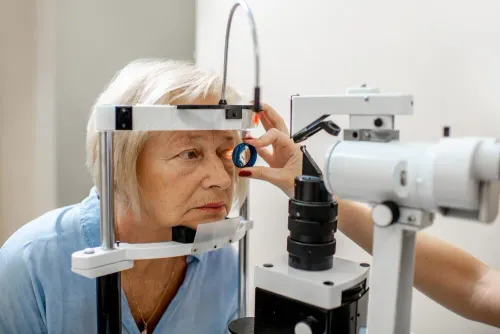
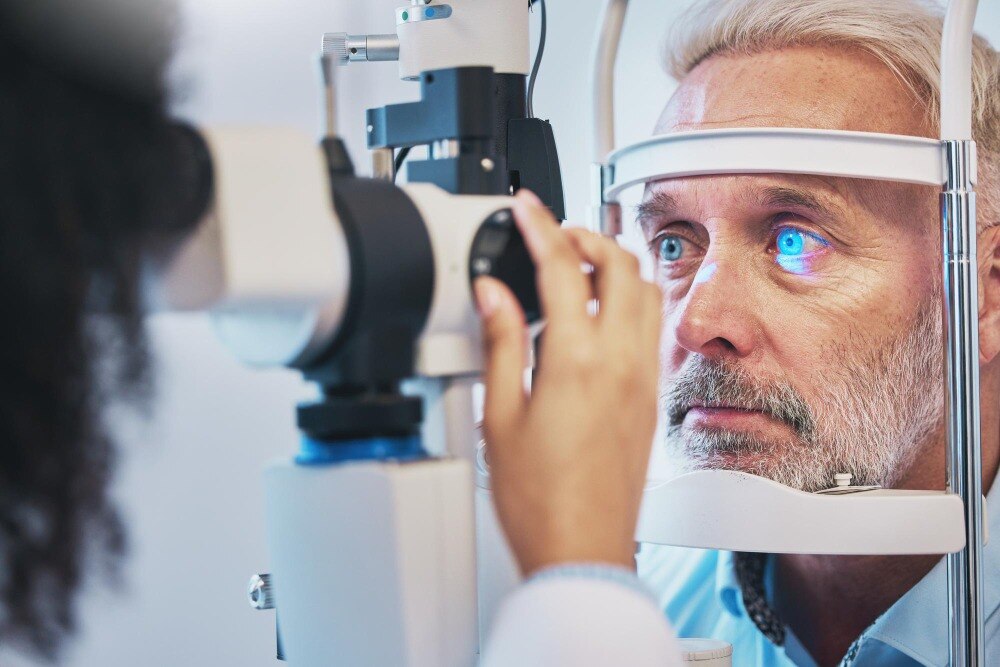
- Tonometry, which measures intraocular pressure. Goldmann applanation tonometry uses a small instrument at the slit lamp; air-puff and handheld devices are alternatives, but their readings are not directly interchangeable.
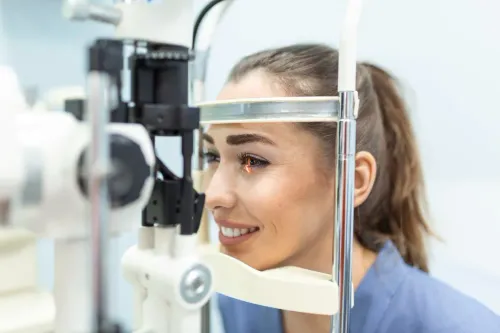
- Slit-lamp examination to inspect the cornea, iris, lens, and other front-of-eye structures.
- Optic-nerve assessment, looking for cupping, asymmetry, rim thinning, or damage.
- Gonioscopy when indicated, using a contact lens to examine whether the drainage angle is open, narrow, or closed.
- Visual-field testing, which checks for missed areas in side vision.
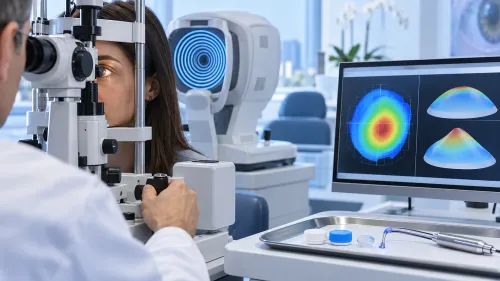
- Optic-nerve photographs or OCT scans to document structural change over time.
A normal pressure reading does not exclude glaucoma: normal-tension glaucoma can damage the optic nerve at statistically normal pressures. Conversely, raised pressure alone does not prove glaucoma, because damage must be assessed. When comparing an “eye pressure test central in mumbai” with a full service, ask whether these additional examinations and follow-up comparisons are included.
How should you prepare, and what do the results mean?
Remove contact lenses before testing if the clinic instructs you to do so, especially before corneal measurements or applanation tonometry. Bring previous eye-pressure readings, optic-nerve photographs, OCT reports, visual-field printouts, your current medicines and doses, and details of relatives with glaucoma.
- Tell the clinician about steroid tablets, inhalers, creams, injections or eye drops; previous eye injuries or surgery; diabetes; migraines; sleep-apnoea concerns; and any change in vision. These details can alter risk assessment and pressure interpretation.
- Ask which pressure method is being used. Goldmann applanation tonometry is the reference method; an air-puff test is convenient for screening, while handheld tonometry helps when positioning is difficult. Readings from different devices are not directly interchangeable.
- Expect the result to be read with the rest of the examination. Pachymetry measures corneal thickness: a thin or thick cornea can make an apparently low or high pressure less straightforward. Pressure alone neither proves glaucoma nor excludes it.
- Review the optic disc, including cup-to-disc cupping, alongside OCT or retinal nerve-fibre-layer images and gonioscopy when indicated. OCT shows structural loss, but a visual field tests functional loss. A first abnormal field may reflect poor fixation, misunderstanding, fatigue or missed responses, so clinicians check its reliability and repeat it when needed.
If you searched for an eye pressure test central in mumbai, choose a service that explains all these results together, not one that reports tonometry alone. A normal pressure reading does not rule out normal-tension glaucoma.
What happens after raised pressure or suspicious test results?
A normal result means routine review, not lifetime clearance. Keep the recommended interval, especially with strong family history; glaucoma can develop between visits, and early damage may cause no symptoms.
Your next step depends on the finding:
- Raised pressure with a healthy-looking nerve: repeat tonometry, gonioscopy, optic-nerve imaging and visual fields before labelling it glaucoma. Corneal thickness and the pressure trend help determine risk.
- Suspicious optic-nerve cupping or OCT change: repeat imaging and examination using the same method, then compare for progression. A single photograph does not establish damage.
- Reproducible visual-field loss: confirm reliability and match the defect with the optic nerve and OCT. Lost field cannot be restored, so treatment aims to prevent further loss.
- Strong family history despite normal tests: schedule periodic examinations rather than waiting for symptoms; the interval depends on age, pressure, nerve appearance and other risks.
Your clinician sets an individualized target pressure, often below your untreated level, and revises it if fields, OCT or nerve examinations worsen. Ask what pressure is acceptable and when testing will be repeated.
Treatment can follow a staged plan:
- Selective laser trabeculoplasty (SLT) may suit newly diagnosed open-angle glaucoma or ocular hypertension and avoids daily drops.
- A prostaglandin-analogue eye drop is used when laser is unsuitable, declined, unavailable or insufficient.
- Trabeculectomy or a drainage-device operation is considered when pressure stays above target or damage progresses despite treatment.
A complete glaucoma treatment central in mumbai service should explain benefits, side effects and postoperative monitoring before surgery.
How can you compare glaucoma services near Mumbai Central?
Choose a service that can complete the glaucoma work-up, not one that only records eye pressure. A glaucoma doctor central in mumbai should examine the optic nerve, perform gonioscopy when the drainage angle needs assessment, test visual fields, and explain how each result affects your diagnosis and pressure target.
Use this checklist before booking:
- Ask whether the visit includes a clinical optic-nerve examination, visual-field testing, and OCT or optic-nerve imaging.
- Confirm that results are stored so later scans, fields, and disc findings can be compared over time.
- Ask how an unreliable visual field or a difference between pressure readings will be handled.
- Request a clear explanation of treatment choices, including drops, selective laser trabeculoplasty, or surgery when appropriate.
- Leave with a written follow-up interval and instructions on what change would bring the appointment forward.
| Service | What to confirm | Warning sign |
|---|---|---|
| Complete glaucoma assessment | Optic-nerve examination, gonioscopy when indicated, fields, and imaging | Tonometry is presented as the diagnosis |
| Progression monitoring | Reports and images compared with earlier results | Every visit starts without reviewing prior records |
| Treatment counselling | Pressure target, drop technique, adverse effects, and alternatives explained | You are told to continue treatment without understanding why |
| Follow-up planning | Next review date and tests stated clearly | No plan after an abnormal result |
For glaucoma treatment central in mumbai, Dr Nusrat Bukhari's Eye Clinic can be assessed using these same practical questions: which tests are available, how progression is documented, and how decisions are explained. The best choice is the service that gives you evidence and a plan, not merely a pressure number.
Related service
Glaucoma Screening & Management Glaucoma Screening & Management Glaucoma is a silent, progressive eye condition that can cause irreversible vision loss if not detected early. View service → |
Frequently asked questions
Who should book glaucoma screening, and when is it urgent?
Adults from age 40 should discuss screening with an eye doctor. Book earlier if you have a close relative with glaucoma, diabetes, high short-sightedness, previous eye injury, steroid use, or are over 60. Seek urgent eye care for severe eye pain, a red eye, halos around lights, nausea or vomiting, or sudden vision loss.
What happens during a complete glaucoma evaluation?
A complete evaluation can include tonometry for eye pressure, gonioscopy to inspect the drainage angle, optic-nerve examination, optical coherence tomography imaging, visual-field testing, and a dilated retinal examination. Tonometry alone cannot confirm or exclude glaucoma.
How should you prepare for a glaucoma screening?
Bring your glasses, medication list, previous eye reports, and details of relatives with glaucoma. Avoid contact lenses for the period advised by the clinic. Ask whether dilation is planned, because blurred near vision and light sensitivity can affect the rest of your day.
What do raised pressure or suspicious test results mean?
Raised pressure does not automatically mean glaucoma, and glaucoma can occur with normal pressure. Your doctor compares pressure, optic-nerve appearance, visual fields, corneal thickness, drainage angle, and OCT findings before recommending monitoring, eye drops, laser treatment, or surgery.
How can you compare glaucoma services near Mumbai Central?
Check whether the service offers visual-field testing, OCT, gonioscopy, optic-nerve assessment, pressure measurement, documented follow-up, and access to a glaucoma specialist. Ask how quickly they review abnormal results and whether treatment and long-term monitoring are available.
Keywords