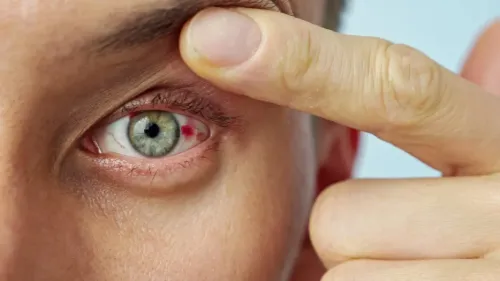
Keratoconus is a progressive eye condition that affects the cornea, the clear front surface of the eye. Instead of maintaining its normal rounded shape, the cornea gradually becomes thinner and bulges outward into a cone-like shape. This change prevents light from focusing properly on the retina, leading to distorted and blurred vision.
For people searching for Keratoconus Treatment in Lalbaug, early diagnosis and regular monitoring are essential. Modern ophthalmology offers several treatment options that can help slow progression and improve visual quality, particularly when the condition is detected in its early stages.
What Is Keratoconus?
The cornea plays a vital role in focusing light entering the eye. In keratoconus, the weakening of corneal tissue changes its shape, making vision increasingly distorted.
The condition usually develops during the teenage years or early adulthood and may continue progressing over several years before stabilising.
Although keratoconus often affects both eyes, one eye may be more severely involved than the other.
Early Symptoms Can Be Easy to Miss
In its initial stages, keratoconus may resemble ordinary refractive errors such as short-sightedness or astigmatism.
Common symptoms include:
- Blurred vision
- Distorted images
- Frequent changes in spectacle prescription
- Increased glare from lights
- Difficulty driving at night
- Halos around lights
- Double vision in one eye
- Difficulty achieving clear vision even with glasses
Because these symptoms develop gradually, many patients delay seeking specialist evaluation.
Who Is More Likely to Develop Keratoconus?
The exact cause is not completely understood, but several factors have been associated with a higher likelihood of developing the condition.
These include:
- Family history of keratoconus
- Chronic eye rubbing
- Severe eye allergies
- Certain genetic conditions
- Connective tissue disorders
Avoiding habitual eye rubbing is often recommended, particularly for individuals with allergies.
How Is Keratoconus Diagnosed?
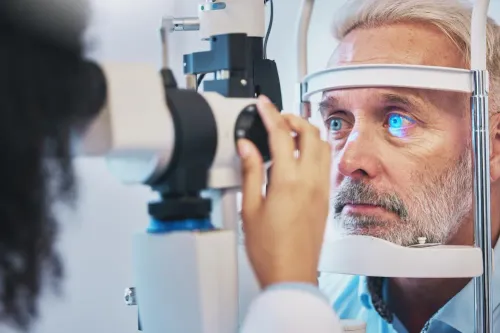
A comprehensive eye examination is necessary to confirm the diagnosis.
The ophthalmologist may perform:
- Visual acuity testing
- Refraction assessment
- Slit lamp examination
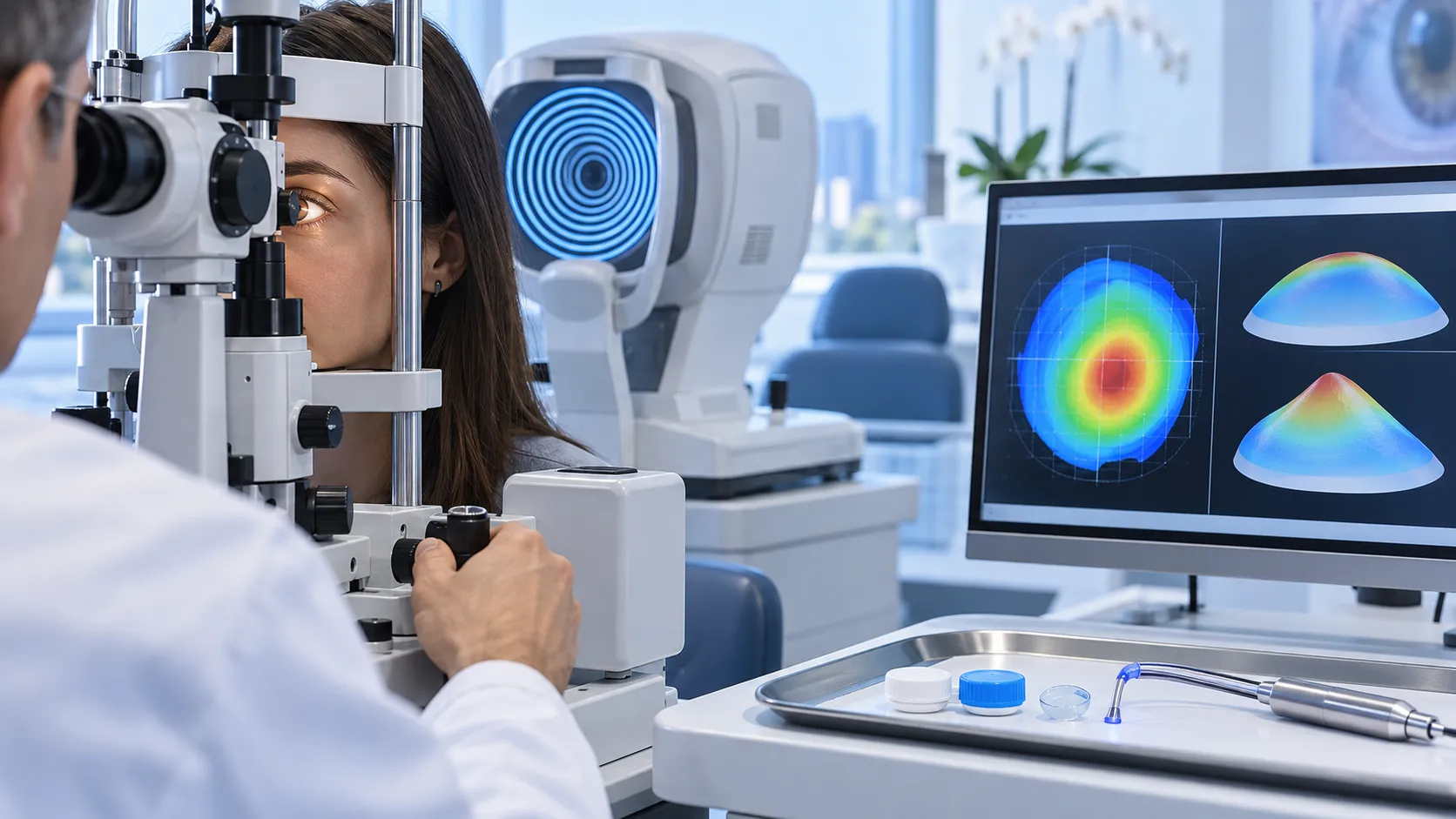
- Corneal topography
- Corneal tomography
- Pachymetry to measure corneal thickness
Corneal imaging is particularly valuable because it can detect early structural changes before they become obvious during routine examinations.
Treatment Depends on the Stage of the Condition
Management varies according to disease severity and progression.
Spectacles
In the earliest stages, glasses may provide satisfactory vision correction.
Contact Lenses
As the cornea becomes more irregular, specially designed contact lenses often provide clearer vision than spectacles.
Depending on the individual case, options may include:
- Rigid gas permeable lenses
- Hybrid lenses
- Scleral lenses
The most appropriate choice depends on corneal shape and patient comfort.
Corneal Collagen Cross-Linking
When keratoconus is actively progressing, corneal collagen cross-linking may be recommended.
The aim of this procedure is to strengthen the corneal tissue and reduce further progression rather than eliminate the condition.
Early intervention often provides the greatest benefit.
Advanced Surgical Options
Patients with advanced keratoconus who cannot achieve adequate vision with glasses or contact lenses may require additional procedures, including corneal transplantation in selected cases.
The ophthalmologist determines suitability based on detailed examination findings.
Why Regular Monitoring Is Essential
Keratoconus can progress at different rates.
Routine follow-up appointments allow the doctor to:
- Compare corneal scans over time
- Detect progression early
- Update vision correction
- Recommend treatment when appropriate
- Monitor long-term outcomes
Skipping follow-up visits may delay important treatment decisions.
Living Comfortably With Keratoconus
Many individuals continue leading active professional and personal lives after diagnosis.
Helpful habits include:
- Attending scheduled eye examinations
- Avoiding excessive eye rubbing
- Managing allergies effectively
- Wearing prescribed spectacles or contact lenses consistently
- Reporting sudden vision changes promptly
Education and regular monitoring remain important components of long-term care.
Finding Reliable Keratoconus Care in Mumbai
People living in Lalbaug and nearby parts of Mumbai often benefit from choosing an eye clinic with experience in diagnosing corneal disorders and access to advanced diagnostic technology. Accurate assessment allows treatment to be planned according to the stage of the disease rather than symptoms alone.
Dr Nusrat Bukhari's Eye Clinic offers comprehensive evaluation and management for keratoconus, using detailed corneal assessment to recommend individualized treatment options. Early diagnosis, regular monitoring, and timely intervention can play an important role in preserving visual quality and reducing the risk of disease progression.
Keywords