Blurred vision, redness, itching, pain or new floaters do not all require the same examination or level of urgency. By understanding what to bring, which tests may be performed and how doctors connect findings to symptoms, you can prepare for an appointment and recognise when waiting is unsafe.
Key takeaways
- Bring your medicines, glasses, reports, referral and appointment details.
- Expect vision testing, eye-pressure measurement and a retina examination.
- Seek same-day care for sudden vision loss, severe pain or new flashes.
- Ask when to return and which symptoms require urgent review.
Before the appointment: what to bring and what the doctor will ask
Registration usually comes first at an eye doctor appointment in Mumbai. Carry identification, appointment details and any referral, then give the clinician a clear account of your main concern before testing begins. History-taking helps decide whether you need a routine vision assessment, a broader ophthalmology consultation in Mumbai or same-day evaluation.
- Bring your current spectacles and contact-lens details, including the lens type, wearing schedule and prescription.
- Carry previous prescriptions, scans, photographs and eye reports so the doctor can compare changes.
- Write down every medicine’s name and dose, including steroid tablets, creams, inhalers or eye drops, and anticoagulants such as warfarin, apixaban or rivaroxaban.
- Note drug allergies and reactions. Bring diabetes records, recent blood-sugar results and blood-pressure readings when those conditions apply.
- Tell the clinician when symptoms began, whether they are worsening, and whether you have pain, redness, discharge, flashes, floaters, headaches, trauma or reduced vision.
- Mention previous eye surgery, contact-lens use and a family history of glaucoma.
The doctor will ask these questions before choosing tests or treatment. Sudden vision loss, severe pain with headache or vomiting, a chemical injury, penetrating trauma, new neurological symptoms, or flashes with a sudden shower of floaters needs urgent assessment rather than routine booking.
Do not self-treat a painful red eye with leftover antibiotic or steroid drops.
The examination: from reading the chart to inspecting the retina
The eye specialist consultation process in Mumbai usually moves from measuring vision to examining the eye’s front and back, with extra tests selected for your symptoms and medical history.
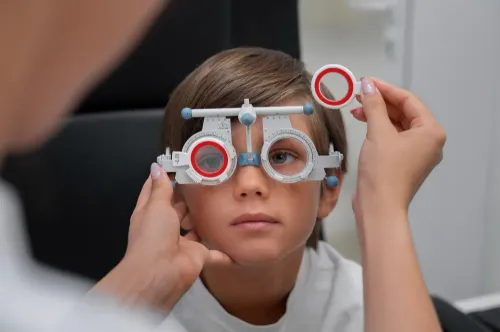
1. Staff record distance and near visual acuity using a chart. The clinician then performs refraction to determine whether myopia, hyperopia, astigmatism or presbyopia explains the blur and whether glasses improve it.
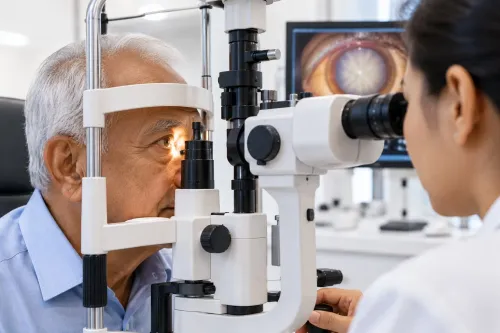
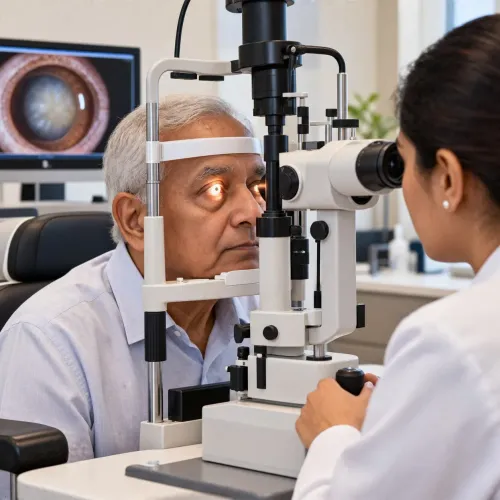
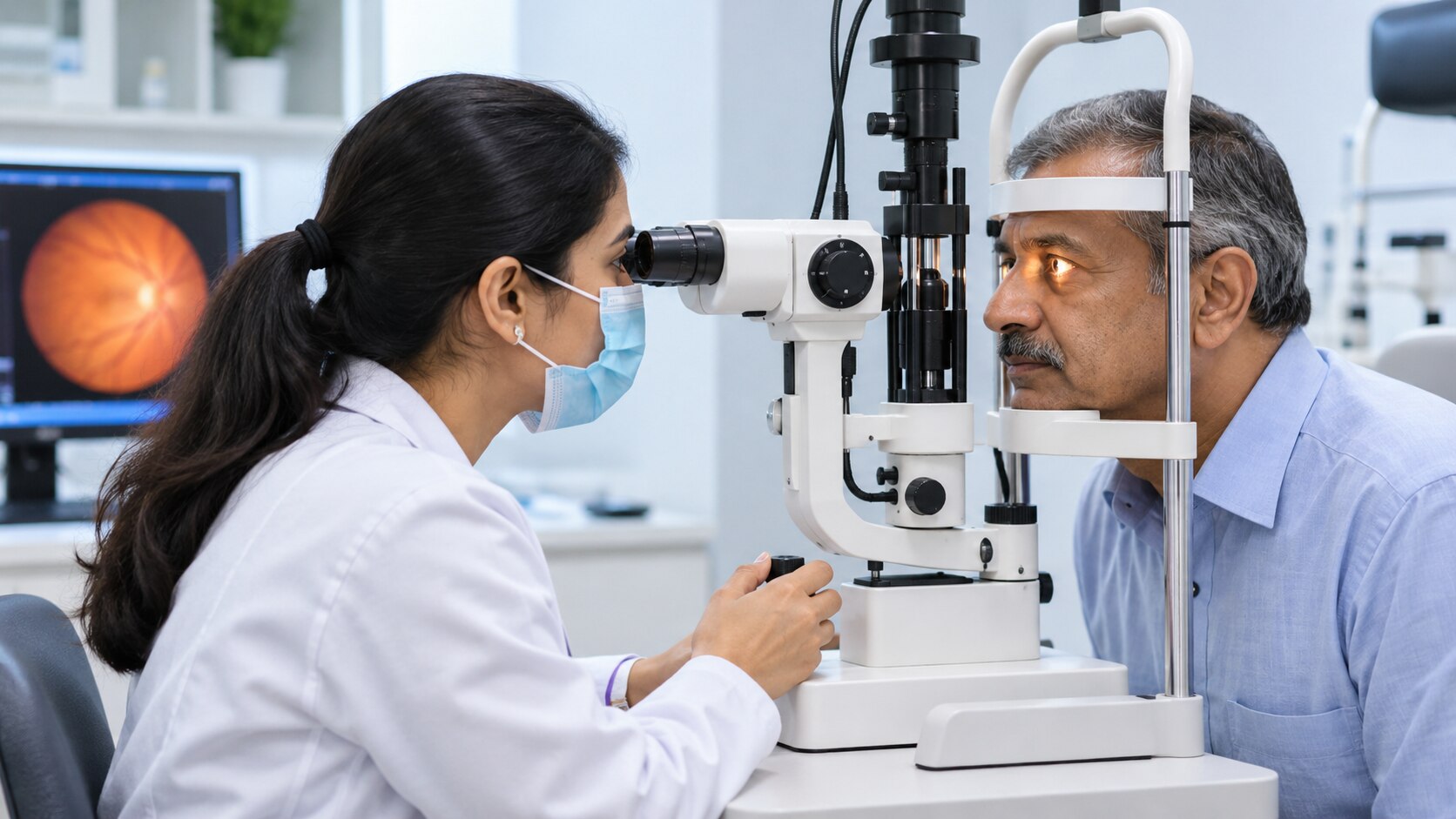
2. The clinician checks pupil reactions and eye movements, then uses a slit lamp to inspect the conjunctiva, cornea, iris and lens. This examination can reveal surface disease, inflammation, corneal changes or cataract.
3. Intraocular pressure is measured with a pressure test. A single reading neither diagnoses nor excludes glaucoma; optic-nerve examination, visual-field testing, corneal-thickness measurement and retinal nerve-fibre imaging may also be needed.
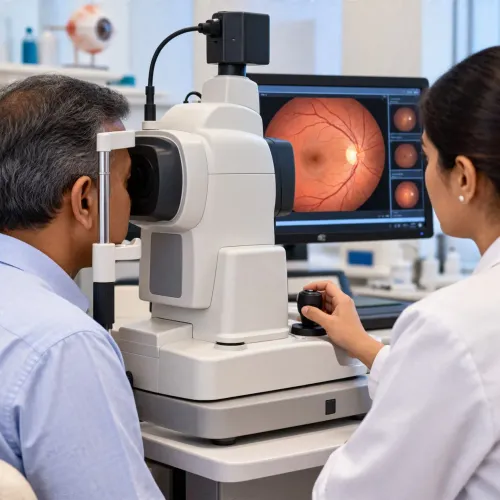
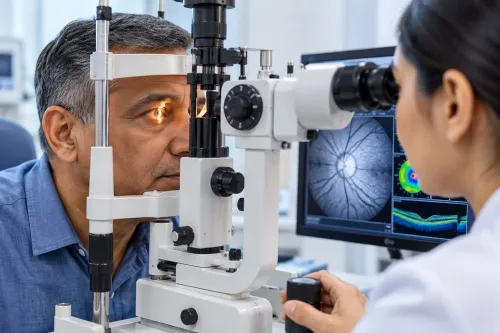
4. Based on the complaint, the examination may include visual-field testing, retinal photography, optical coherence tomography or ocular ultrasound. These tests help examine the optic nerve, macula, retina or structures hidden from a basic inspection.
Dilation may be recommended for diabetes, unexplained vision loss, flashes, floaters, high myopia, suspected retinal disease or surgical planning. Dilating drops cause light sensitivity and blurred near vision for several hours. Carry sunglasses, ask whether dilation is planned during your ophthalmology consultation in Mumbai, and arrange transport if driving may be unsafe.
How doctors identify the cause of blurred or fluctuating vision
Blurred vision is not automatically an incorrect glasses prescription: doctors match the complaint to findings in the eye. For common eye problem diagnosis in Mumbai, refraction identifies myopia, hyperopia, astigmatism or presbyopia, but a prescription alone is not a complete eye assessment.
During an ophthalmology consultation in Mumbai, the clinician may investigate the cause through these checks:
- Tear-film and surface review: dry eye, contact-lens wear, medication effects and corneal irregularity can make clarity fluctuate.
- Slit-lamp examination: the doctor inspects the cornea and lens for surface disease, opacity and cataract that match glare or reduced vision.
- Glaucoma assessment: optic-nerve appearance, intraocular pressure, visual fields and retinal nerve-fibre imaging are considered together. One pressure reading cannot confirm or exclude glaucoma.
- Retinal assessment: dilation, retinal photographs and optical coherence tomography can reveal diabetic retinopathy or macular disease before vision changes. This matters even when you feel no symptoms.
The doctor should link each diagnosis to a specific finding, such as lens opacity, an irregular corneal surface or retinal damage, rather than label every abnormal test as disease. The plan may be observation, updated glasses, lubricating or other drops, further testing, or treatment.
Ask which finding explains your symptom and when the result needs review.
Redness, pain, flashes and floaters: when a routine visit is not enough
A red or painful eye is triaged by symptoms, not redness alone. Itching with watery eyes points toward allergy, while burning, grit and fluctuating vision fit dry eye or eyelid disease.
During an eye doctor appointment in Mumbai, the clinician asks about onset, discharge, contact lenses, trauma, medicines and vision change before examining the eyelids, cornea, pupil and front of the eye.
Discharge can occur with infection, but pain, light sensitivity, reduced vision or a cloudy cornea raises concern for corneal injury or keratitis. Deep pain, marked light sensitivity or an abnormal pupil can indicate uveitis. Severe pain with headache, vomiting or sudden blurred vision requires urgent assessment for angle-closure glaucoma, not self-prescribed antibiotic drops.
Dry-eye assessment includes screen exposure, sleep, medicines, contact-lens use and environmental triggers. The clinician may inspect the eyelid margins and tear film, then assess tear production or tear-film breakdown. This distinction matters in common eye problem diagnosis in Mumbai.
Use this urgency checklist:
- Remove contact lenses immediately if the eye is painful, red or vision is reduced, and seek same-day eye care. Do not reuse the lenses or rely only on over-the-counter drops.
- Seek urgent retinal evaluation for flashes, a sudden shower of floaters, or a curtain-like shadow, even without pain.
- Go to an emergency department or urgent eye service for chemical injury, penetrating trauma, sudden major vision loss or new neurological symptoms.
- Take your medicines and previous eye records to emergency care; do not wait for a routine appointment.
Choosing the right appointment and understanding the follow-up plan
Choose the appointment by symptom, not by the label on the booking page.
| Option | What it covers | When it fits |
|---|---|---|
| Routine vision check | Distance and near acuity, refraction and a basic eye examination | No pain, redness, flashes, floaters or unexplained vision change |
| Comprehensive ophthalmology consultation | Medical history, eye-health examination and targeted tests | Diabetes, hypertension, glaucoma risk, persistent symptoms or changing vision |
| Urgent assessment | Priority retinal, corneal or intraocular-pressure evaluation | Sudden vision loss, severe pain, flashes, a sudden shower of floaters or a curtain-like shadow |
A routine check may end with a glasses prescription, but refraction alone cannot explain every visual problem. A comprehensive visit can lead to lubricants, another medicine, monitoring, imaging, subspecialist referral, or discussion of laser or surgery. If surgery is proposed, ask about alternatives, expected benefit, material risks, recovery and what happens if you defer it.
Before leaving, ask:
- What did you find?
- Which examination or scan supports that diagnosis?
- When should I return?
- Which symptom requires earlier care?
For patients comparing an ophthalmology consultation in Mumbai, Dr Nusrat Bukhari's Eye Clinic is one option to assess by its examination pathway, location and follow-up arrangements. The same questions apply when choosing an eye doctor appointment in Mumbai elsewhere.
Related service
Comprehensive Eye Check-ups Regular eye examinations are essential for maintaining sharp vision and detecting hidden eye problems early. View service → |
Frequently asked questions
What should I bring to an ophthalmology consultation in Mumbai?
Bring identification, appointment details, any referral, current glasses or contact lenses, previous eye reports and a list of medicines. Tell the doctor when your symptoms started, whether one or both eyes are affected and what makes them better or worse.
What happens during an eye doctor appointment in Mumbai?
The appointment usually includes history-taking, distance and near vision testing, examination of the front of the eye, eye-pressure measurement and inspection of the retina. The doctor may add tests based on your symptoms and initial findings.
How do doctors find the cause of blurred or fluctuating vision?
They compare each eye's vision, check refraction, examine the cornea, lens and retina, measure eye pressure and review symptom patterns. Fluctuation linked to reading, diabetes, contact lenses or medication can guide further testing.
When do redness, pain, flashes or floaters need urgent eye care?
Seek same-day evaluation for sudden vision loss, severe eye pain, a red eye with reduced vision, new flashes, a sudden increase in floaters or a curtain-like shadow. These symptoms can require treatment beyond a routine appointment.
How do I choose the right appointment and understand the follow-up plan?
Choose a routine consultation for stable concerns such as gradual blur or a glasses check. Request urgent assessment for sudden or painful symptoms, and leave with the diagnosis, test results, treatment instructions, return date and warning signs that require earlier review.
Keywords