A sudden change in sight, severe pain, chemical splash, or eye injury needs a decision about urgency before you travel. By the end, you will know what to do immediately, what clinicians check in sequence, when a hospital is safer, and what recovery and follow-up involve.
Key takeaways
- Treat sudden vision loss, severe pain, chemical exposure, and penetrating injuries as emergencies.
- Rinse chemical exposure with clean running water and avoid rubbing or pressing the eye.
- Expect vision checks, pupil examination, eye-pressure measurement, and a detailed eye inspection.
- Choose a provider with emergency ophthalmology access and clear follow-up instructions.
Which sudden eye symptoms need immediate care?
Sudden vision loss, severe eye pain, chemical exposure, or a penetrating injury needs emergency assessment now. A new curtain-like shadow, flashes with a sudden shower of floaters, unequal pupils, blood in the eye, or vision changes after trauma also demands immediate eye care in Mumbai.
These signs can indicate retinal detachment, acute glaucoma, open-globe injury, or a blocked retinal artery.
| Urgency | Symptoms | What to do |
|---|---|---|
| Emergency now | Sudden painless or painful vision loss, severe pain, chemical exposure, penetrating injury, curtain or shadow, flashes with many new floaters, unequal pupils, marked swelling, or trauma-related vision change | Go to an emergency eye service immediately. Call 112 if severe vision loss, major trauma, or unsafe transport makes driving unsuitable. |
| Emergency now | Fever, bulging eye, double vision, pain when moving the eye, eyelid swelling, or reduced vision | Seek hospital care; orbital cellulitis can threaten sight and require intravenous antibiotics or surgery. |
| Same-day review | New moderate red-eye pain, light sensitivity, persistent blurred vision, a suspected foreign body, or worsening symptoms after cataract surgery, an injection, or another eye procedure | Arrange urgent ophthalmic assessment that day; do not wait for a routine slot. |
| Routine appointment | Mild, stable irritation or dryness with normal vision, no injury, and no severe pain | Book routine care, but upgrade the urgency if vision changes or symptoms worsen. |
Knowing what happens during emergency eye care after a sudden eye problem in Mumbai helps you choose speed over convenience. Do not rub the eye or use someone else’s drops; chemical exposure requires continuous water or saline irrigation while arranging transport.
What should you do before reaching an emergency eye service?
Start protecting the eye before you leave. Chemical exposure requires continuous flushing with clean running water or saline for at least 20 minutes; remove contact lenses only if they come out easily, and keep rinsing during travel. Do not try to neutralise the chemical with another substance.
- Avoid rubbing the eye. If dust or a loose foreign body remains after rinsing, leave it alone rather than scraping it with a cotton bud, tissue, or fingernail.
- Do not pull out glass, metal, or any object stuck in the eye. Place a clean rigid shield over the eye without pressing on it, and avoid driving after a penetrating injury.
- Remove a contact lens only when it slides out easily. Do not force a lens off a painful eye, and do not reinsert it.
- Do not use steroid drops, someone else’s prescription drops, or anaesthetic pain-relief drops. They can worsen infection, delay healing, or conceal deterioration.
- Take the chemical container or product name, current medicines, allergies, contact lenses, recent prescriptions, and details of any eye operation or injection.
For immediate eye care in Mumbai, call 112 instead of driving if vision loss is severe, trauma is major, or safe transport is unavailable. Tell the service exactly when symptoms began; this helps direct sudden eye problem treatment in Mumbai.
What happens during an urgent eye assessment in Mumbai?
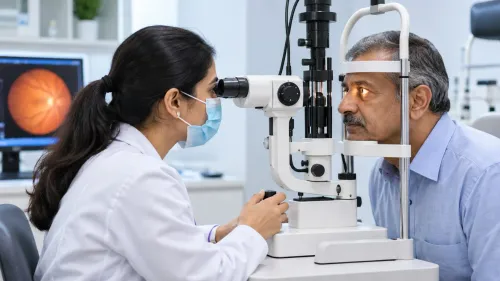
Registration starts the urgent eye assessment in Mumbai, but triage sets the order. Tell staff immediately about sudden vision loss, severe pain, chemical exposure, trauma, recent eye surgery, flashes, floaters, or a curtain-like shadow. The emergency ophthalmology process in Mumbai then follows the injury’s threat to sight, not the queue order.
- A clinician records the onset, speed of change, pain, discharge, medications, contact-lens use, medical conditions, and recent procedures.
- Staff measure each eye’s visual acuity, check pupils for unequal size or an abnormal light response, and assess eye movements.
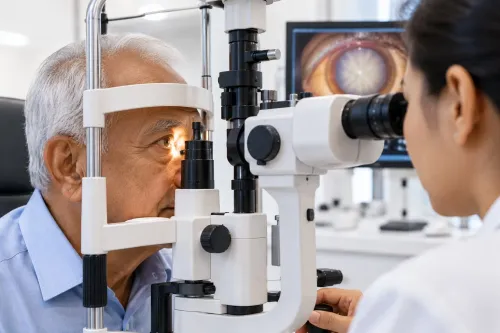
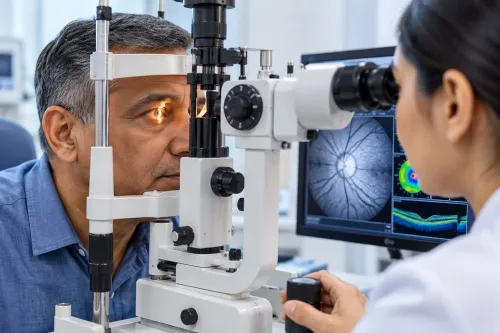
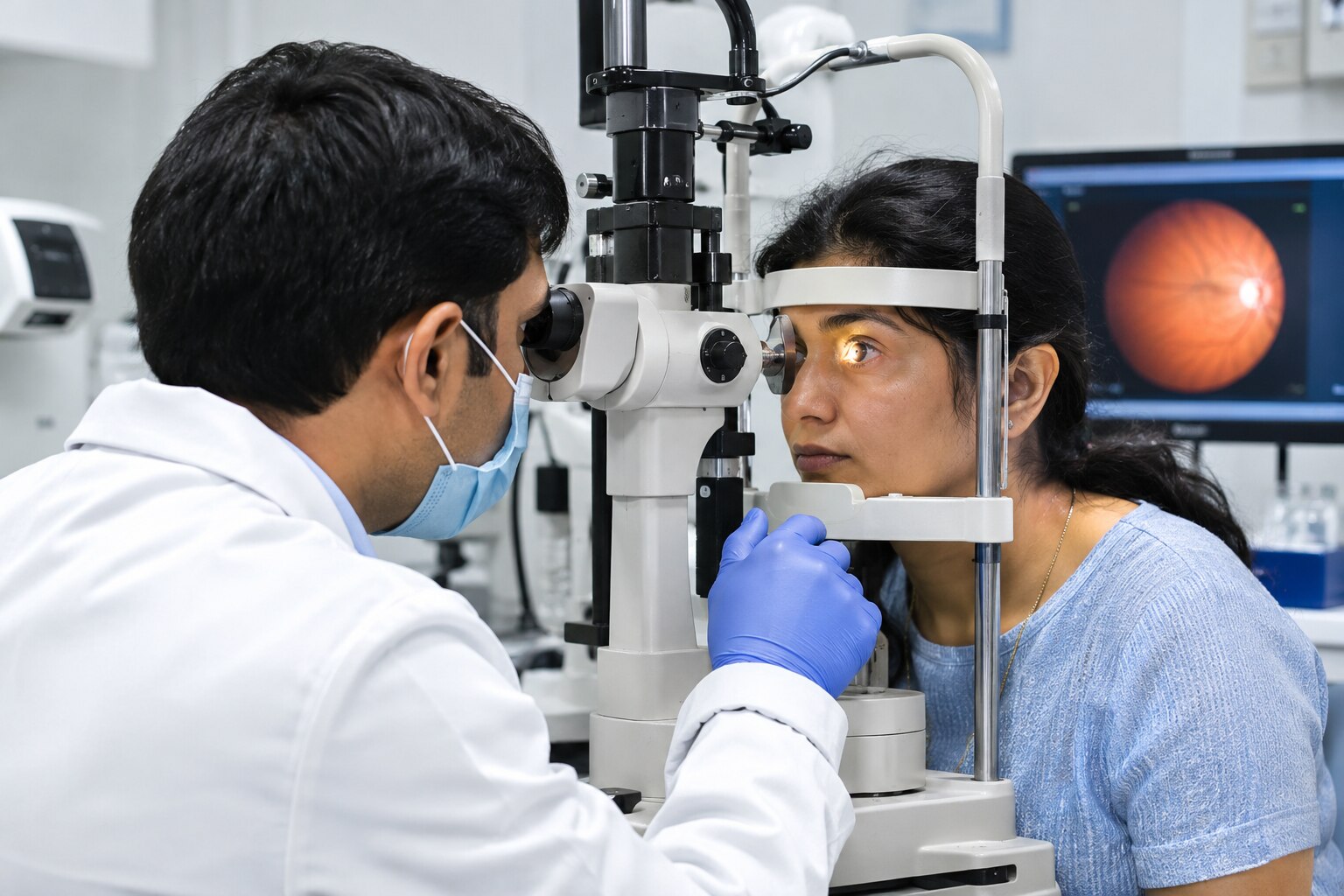
- A slit-lamp examination, often with fluorescein, looks for scratches, ulcers, foreign bodies, inflammation, and leaking wounds.
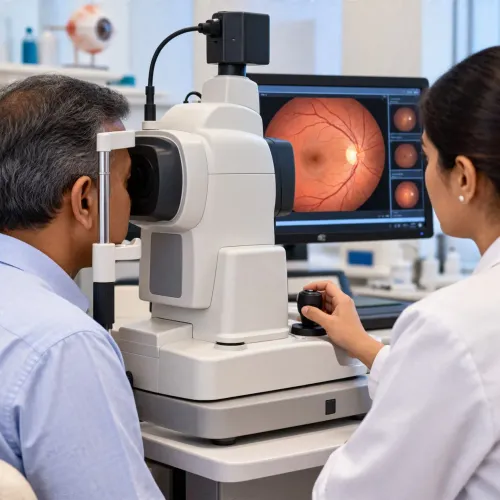
- Clinicians measure intraocular pressure when glaucoma is suspected, then examine the retina after dilation when safe.
- Imaging or laboratory tests follow the findings: ultrasound or CT can assess retinal, orbital, or traumatic injury; blood tests and eye-fluid samples can support infection or vascular evaluation.
| Test | When it is used | When it must wait |
|---|---|---|
| Eye-pressure measurement | Suspected acute glaucoma | Defer if an open-globe injury is suspected |
| Dilated retinal examination | Suspected detachment, bleeding, or vascular blockage | Wait until the eye is protected and the clinician confirms dilation is safe |
| CT, ultrasound, blood tests, or fluid sampling | Trauma, stroke risk, infection, or postoperative inflammation | Do not delay urgent treatment when examination already shows a sight-threatening emergency |
How do clinicians identify the cause and choose treatment?
Clinicians match the symptom pattern with visual acuity, pupil responses, eye movements, slit-lamp findings, fluorescein staining, pressure measurement, and a dilated retinal examination. This is the core of the emergency ophthalmology process in Mumbai; imaging follows when swelling, blood, trauma, or an obstructed view prevents a safe examination.
| Cause | Clues clinicians look for | Treatment that may follow |
|---|---|---|
| Irritation or conjunctivitis | Itching, discharge, surface redness, normal vision and pressure | Lubricants, hygiene advice, or prescribed antimicrobial treatment |
| Abrasion or foreign body | Gritty pain, tearing, blinking pain, fluorescein stain or visible particle | Removal, antibiotic ointment, pain control, and review |
| Acute angle-closure glaucoma | Severe pain, halos, headache, nausea, cloudy cornea, high pressure | Immediate pressure-lowering medicines and laser peripheral iridotomy |
| Retinal detachment or artery blockage | Curtain-like shadow, flashes and floaters, or sudden profound painless loss | Urgent retinal surgery assessment or stroke and vascular assessment |
| Chemical burn | Damaged ocular surface after chemical exposure | Continuous saline or water irrigation, then specialist treatment |
| Orbital cellulitis or injury | Fever, bulging eye, double vision, painful movement, fracture signs | Contrast CT, intravenous antibiotics, admission, or drainage |
| Postoperative complication | New pain, redness, discharge, light sensitivity, or reduced vision after surgery | Same-day surgical review, cultures, injections, or further surgery |
A blocked view from blood or a dense cataract may require ocular ultrasound. CT helps detect fractures, retained foreign bodies, and orbital infection; MRI waits until metal has been excluded. This determines sudden eye problem treatment in Mumbai rather than allowing drops alone to mask a sight-threatening cause.
How should you choose a provider and manage care after discharge?
Choose a provider that can examine the retina, measure eye pressure, perform slit-lamp assessment, and arrange imaging or surgery without sending you elsewhere. For what happens during emergency eye care after sudden eye problem in Mumbai, ask who handles open-globe injuries, acute glaucoma, retinal detachment, chemical burns, and vascular vision loss.
| Option | What it offers | When it is safer |
|---|---|---|
| Dedicated eye emergency service | Ophthalmic examination and eye-specific treatment | Isolated eye pain, injury, flashes, floaters, or sudden visual change when the facility has on-call specialists |
| Hospital emergency department | Resuscitation, CT, intravenous medicines, admission, and multiple specialties | Severe trauma, suspected orbital cellulitis, stroke symptoms, profound painless vision loss, unstable health, or likely surgery |
| Routine eye clinic | Planned examination and follow-up | Stable dryness, allergy, longstanding floaters, unchanged glasses need, or gradual symptoms without red flags |
An urgent eye assessment in Mumbai can consume several hours, especially if dilation, CT, consultation, or admission is required. Bring the medicine and allergy list, prescriptions, contact lenses, chemical container, and operation details; use 112 instead of driving if vision is severely impaired or transport is unsafe.
Dr Nusrat Bukhari's Eye Clinic is one option to compare by asking whether the required specialist, equipment, and referral pathway are available at the time you attend.
After discharge, do not drive until vision is safe and dilation has worn off, avoid rubbing or heavy exertion when instructed, and use only the prescribed drops. Return immediately for worsening pain, reduced vision, new flashes or floaters, a curtain-like shadow, increasing swelling, fever, vomiting, double vision, or fresh bleeding.
Stable irritation or unchanged floaters belong in routine care.
Related service
Emergency Eye Care Dr. Nusrat Bukhari provides prompt and reliable Emergency Eye Care for patients experiencing sudden or serious eye problems. View service → |
Frequently asked questions
Which sudden eye symptoms need immediate care?
Seek immediate eye care for sudden vision loss, severe eye pain, chemical exposure, penetrating injury, a curtain-like shadow, new flashes with many floaters, unequal pupils, blood in the eye, or vision changes after trauma.
What should you do before reaching an emergency eye service?
Do not rub or press the eye. Rinse chemical exposure with clean running water, avoid removing an embedded object, and take contact lenses out only if they come away easily. Arrange urgent transport rather than driving if your vision is impaired.
What happens during an urgent eye assessment in Mumbai?
Clinicians record how and when symptoms began, check visual acuity, pupils, eye movements, and eye pressure, then examine the front and back of the eye. They may use fluorescein staining, slit-lamp examination, dilation, ultrasound, or imaging.
How do clinicians identify the cause and choose treatment?
They compare your symptoms, injury history, examination findings, and test results to identify problems such as corneal injury, infection, glaucoma, retinal detachment, bleeding, or trauma. Treatment can include irrigation, medication, pressure reduction, repair, laser treatment, or urgent surgery.
How should you choose a provider and manage care after discharge?
Choose an eye service that can perform urgent examination and arrange specialist treatment or surgery when needed. Before leaving, confirm medication doses, warning signs, activity restrictions, review time, and the phone number to call if symptoms worsen.
Keywords