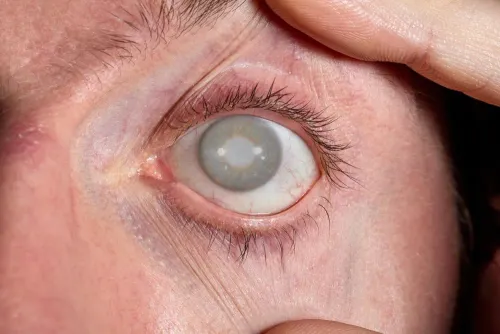
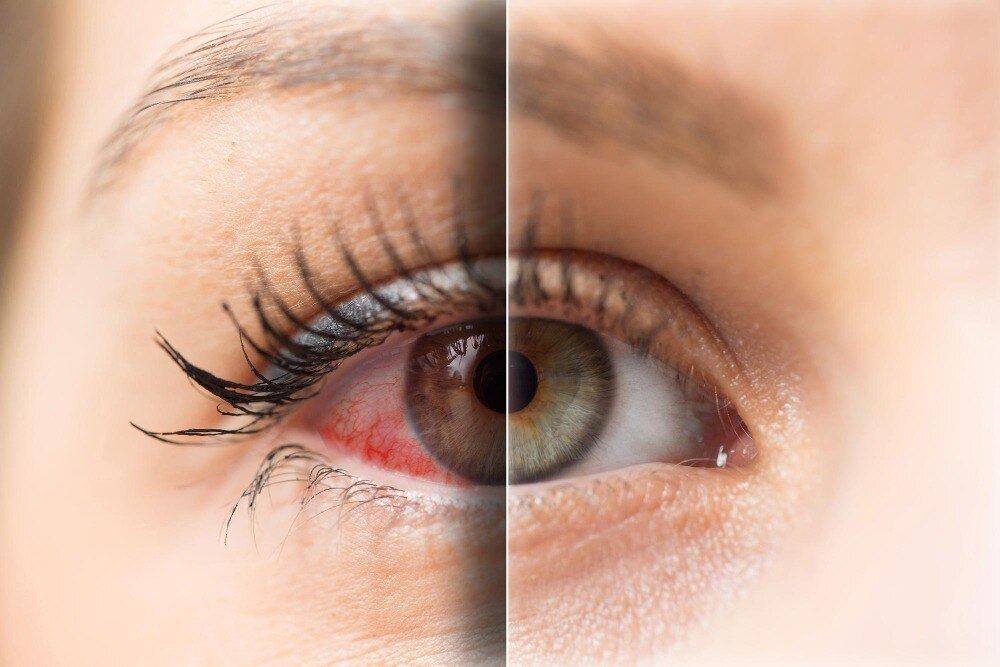
Red, watery or burning eyes do not point to one diagnosis: itching with sneezing often suggests allergy, while gritty discomfort and fluctuating vision more often suggest dry eye. You will learn how to separate these patterns, what to do safely at home, which drops require medical guidance and when persistent irritation needs an eye examination in Grant Road.
Key takeaways
- Itching points more strongly to allergy; gritty burning points more strongly to dry eye.
- Avoid redness-relief drops for repeated use without an eye examination.
- Persistent irritation needs evaluation for infection, eyelid disease, or corneal problems.
- Choose an eye clinic that examines the eye surface before recommending drops.
Is the irritation more likely to be dry eye or an allergy?
Itching as the dominant symptom points more strongly to an eye allergy; gritty burning, fluctuating vision and discomfort after screen use point more strongly to dry eye. Both can cause redness and reflex watering, and both conditions can occur together.
| Clue | More suggestive of allergy | More suggestive of dry eye |
|---|---|---|
| Itch | Strong, frequent itching | Mild or absent |
| Triggers | Dust, pollen, pets, seasonal exposure | Screens, wind, air-conditioning, prolonged visual tasks |
| Pattern | Usually affects both eyes; sneezing may occur | Worsens through the day or after concentrated visual work |
| Sensation | Watery, swollen, irritated eyes | Sandy or gritty feeling, burning, fluctuating vision |
| Relief | Improves after leaving the trigger or using a cool compress | Improves after blinking or lubricating drops |
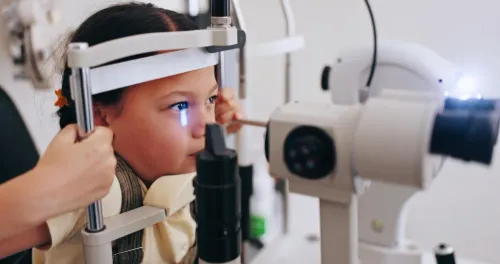
Do not diagnose yourself from redness alone. Persistent symptoms need an eye examination because eyelid-margin disease, contact-lens complications, a foreign body, medication-related irritation and corneal problems can look similar. A clinician may use a slit-lamp examination, tear-break-up time, ocular-surface staining, tear-meniscus assessment and meibomian-gland evaluation.
If you are searching for dry eye allergy eye for treatment grant road, expect treatment matched to the cause rather than one universal drop. Allergy care often combines trigger avoidance with antihistamine/mast-cell-stabiliser drops; oral antihistamines can worsen dryness. Searching for dry eye treatment grant road should lead you to an assessment when irritation persists.
Which other conditions can cause the same red, irritated eye?
Arrange an examination when redness or burning persists despite avoiding likely triggers, keeps returning, affects one eye, or comes with pain, discharge, swelling or vision changes. Searching for eye irritation treatment grant road should not end with choosing another universal eye drop; the same symptom can come from a different problem.
Blepharitis and meibomian-gland dysfunction inflame the eyelid edges and disturb the tear film. A trapped foreign body, contact-lens complication, pterygium, chalazion, medication-related irritation, infectious conjunctivitis, corneal disease or glaucoma also needs consideration.
| Condition | Clues that need assessment | Why an examination matters |
|---|---|---|
| Blepharitis or eyelid-gland disease | Crusts, greasy lashes, swollen lids or recurrent irritation | Treatment must address the lid margins, not only the tears |
| Infection | Thick discharge, marked redness or rapidly worsening symptoms | Antibacterial or other treatment depends on the cause |
| Corneal problem or foreign body | Sharp pain, pronounced watering, light sensitivity or a scratch sensation | Delay can damage the corneal surface |
| Contact-lens complication | Redness and pain while wearing lenses, especially with blurred vision | Remove the lens and obtain prompt clinical advice |
| Glaucoma or deeper inflammation | One-sided redness, severe pain, halos, nausea or headache | These signs need urgent assessment |
Seek urgent care for sudden vision loss, severe pain, strong light sensitivity, chemical exposure or a corneal injury. An ophthalmologist can use a slit-lamp examination, ocular-surface staining, tear-break-up time and eyelid assessment to identify the cause.
What can you do now, and which eye drops should you avoid?
Start with preservative-free artificial tears, a cool compress over closed eyes, and a strict no-rubbing rule. Remove contact lenses, take screen breaks, blink fully, and reduce exposure to dust, pollen, smoke, fans and air-conditioning. Wash your face and eyelids after outdoor exposure.
If itching dominates, an antihistamine/mast-cell-stabiliser eye drop may suit allergy-related irritation; ask a pharmacist or clinician to confirm the product and instructions. Oral antihistamines can ease nasal symptoms but can worsen ocular dryness.
A search for allergy eye treatment in Grant Road should lead to an examination when symptoms persist, not a hunt for one universal drop.
| Drop or approach | What it can do | What to watch for |
|---|---|---|
| Preservative-free artificial tears | Lubricate a dry, gritty surface | They do not treat infection or significant inflammation |
| Antihistamine/mast-cell stabiliser | Controls allergic itching and inflammation | Choose it when allergy is suspected and follow the label |
| Redness-relief vasoconstrictor | Temporarily narrows surface blood vessels | Repeated use can cause rebound redness |
| Leftover antibiotic drops | Treat bacterial infection only when diagnosed | They do not treat ordinary dry eye or allergy |
| Homemade mixtures | No reliable sterile dose or safety | Contamination can injure the cornea |
Do not use someone else’s drops, old prescriptions, rose water or other homemade liquids. Seek urgent assessment for severe pain, marked light sensitivity, sudden vision loss, chemical exposure, corneal injury, one-sided intense redness, or nausea with headache.
What happens during an evaluation for persistent irritation?
An ophthalmologist first checks whether the irritation comes from tear loss, allergy, eyelid disease or another problem. The assessment usually combines your symptom pattern and medication history with a slit-lamp examination rather than selecting a universal drop.
| Check | What it reveals | Why it changes treatment |
|---|---|---|
| Slit-lamp examination | Redness, surface damage, blepharitis, foreign body, pterygium or contact-lens injury | Identifies conditions needing targeted care |
| Tear-break-up time | How quickly the tear film breaks apart after blinking | Supports a dry-eye diagnosis and guides lubrication |
| Ocular-surface staining | Areas where the cornea or conjunctiva are damaged | Shows whether irritation has caused surface injury |
| Tear-meniscus assessment | The amount of tears gathered along the lower eyelid | Helps distinguish reduced tear volume from other causes |
| Eyelid margins and meibomian glands | Blocked glands, crusting or poor oil release | Points towards eyelid treatment rather than tears alone |
Tell the clinician whether itching dominates, whether both eyes are affected, and whether symptoms follow dust, pollen or a season. Also mention screen use, air-conditioning, contact lenses, previous drops and medicines; preserved drops used frequently can worsen a sensitive surface.
The findings determine whether you need preservative-free artificial tears, an antihistamine/mast-cell-stabiliser drop, or dry eye treatment Grant Road. Allergy eye treatment Grant Road also includes trigger avoidance, cool compresses and stopping eye rubbing.
Prescription anti-inflammatory drops or punctal plugs suit selected chronic dry-eye cases, not every irritated eye; plugs can cause watering, while anti-inflammatory treatment requires monitoring.
How should you choose eye care in Grant Road?
Routine specialist care fits persistent grittiness, burning, fluctuating vision, screen-related discomfort, or itching without severe pain or vision change. If you searched dry eye allergy eye for treatment grant road, expect an examination rather than one universal drop.
| Care level | What it means | When it applies |
|---|---|---|
| Routine appointment | Examine the eye surface and identify the cause | Symptoms persist, recur, affect work, or fail to improve with sensible measures |
| Urgent assessment | Same-day eye evaluation | Severe pain, marked light sensitivity, sudden or significant vision loss, chemical exposure, corneal injury, pronounced one-sided redness, or nausea with headache |
Dr Nusrat Bukhari's Eye Clinic can assess persistent symptoms with slit-lamp examination, tear-break-up time, ocular-surface staining, tear-meniscus assessment, and checks of the eyelid margins and meibomian glands. That process helps separate allergy, evaporative dry eye and blepharitis from infection, corneal disease, medication irritation or glaucoma.
Ask what the examination found before starting treatment. Allergy care may combine trigger avoidance, cool compresses and antihistamine/mast-cell-stabiliser drops; dry-eye care may involve lubricants, lid hygiene, warm compresses or prescription anti-inflammatory treatment. Oral antihistamines can worsen dryness.
Persistent gland obstruction needs clinician-directed care, and surgery is not assumed: it is considered only when a structural problem or another clear indication makes a procedure appropriate.
Related service
Dry Eye & Allergy Eye Treatment Dry Eye & Allergy Eye Treatment by Dr. Nusrat Bukhari Dryness, redness, itching, and irritation of the eyes are common concerns that can affect daily comfort and vision quality. View service → |
Frequently asked questions
How can you tell whether irritation is dry eye or an allergy?
Itching points more strongly to an allergy. Gritty burning, fluctuating vision, and discomfort after screen use point more strongly to dry eye. Both can cause redness and reflex watering, and they can occur together.
Which other conditions can cause a red, irritated eye?
Infection, eyelid inflammation, a blocked tear duct, contact-lens complications, corneal injury, and inflammation inside the eye can resemble dry eye or allergy. Persistent, painful, light-sensitive, or vision-affecting symptoms need an eye examination.
What should you do before receiving treatment for eye irritation?
Do not rub your eyes, pause contact-lens wear, and use a clean cold compress for itch-related discomfort. Avoid repeated use of redness-relief drops unless an eye professional recommends them.
What happens during an evaluation for persistent eye irritation?
The clinician reviews your symptoms, medicines, contact-lens use, screen exposure, and allergies, then examines the eyelids, tear film, conjunctiva, and cornea. Testing can identify dry-eye changes or another cause.
How should you choose eye care in Grant Road?
Choose a clinic that can distinguish allergy from dry eye, examine the cornea and eyelids, review current drops, and provide treatment or referral when symptoms suggest a more serious condition.
Keywords