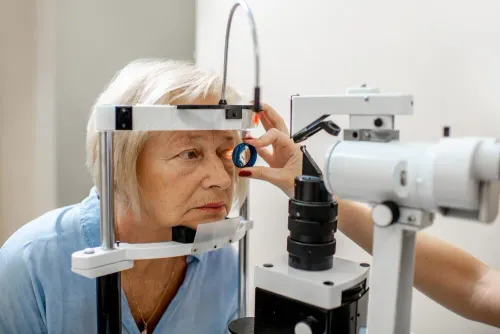
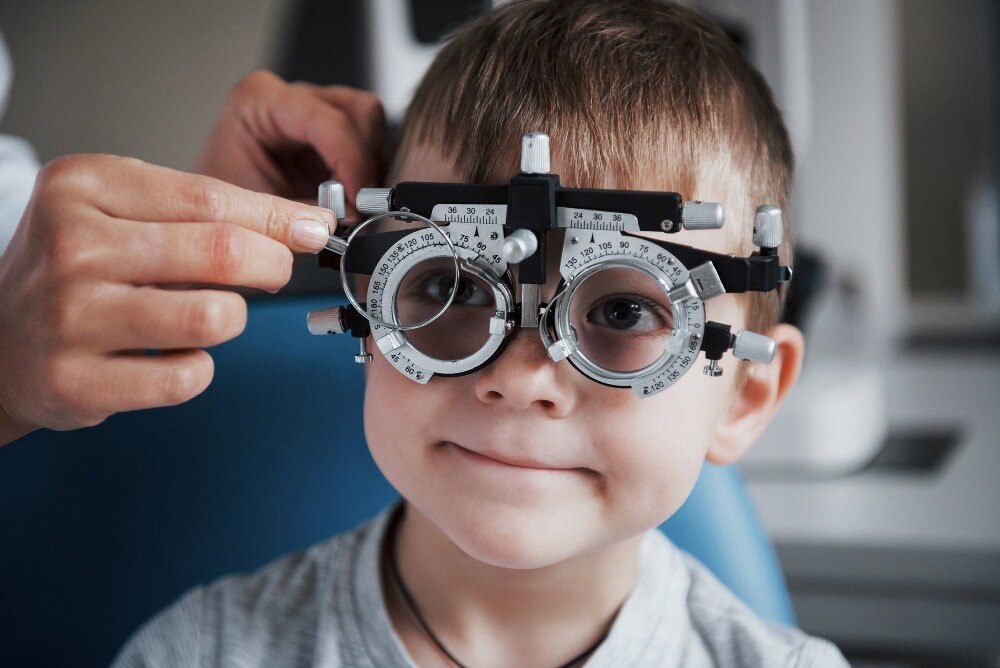
A child may have reduced vision, a developing squint or an unequal prescription without telling you that anything is wrong. By the end, you will know what a local paediatric eye assessment involves, which symptoms need routine or urgent attention, and what questions to ask before booking an examination.
Key takeaways
- Ask for each eye to be tested separately, even when your child sees well.
- Book an appointment for persistent eye rubbing, headaches, squinting or school difficulties.
- Seek urgent assessment for sudden vision loss, eye injury, severe pain or a red swollen eye.
- Treatment may include glasses, patching, drops, exercises or squint surgery.
What happens during a paediatric eye examination?
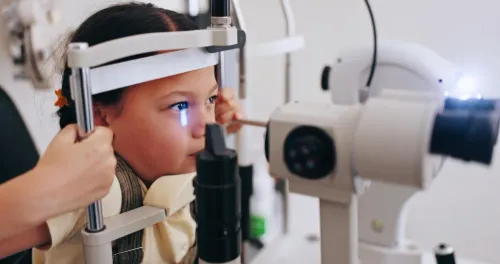
Paediatric eye care for Charni Road residents involves more than reading letters from a chart. The clinician takes a history of birth, development, family eye conditions, headaches, eye rubbing and school difficulties, then tests each eye separately because a stronger eye can hide reduced vision in the other.
During a pediatric eye examination Charni Road families arrange locally, the assessment may include:
- Age-appropriate visual-acuity testing, using pictures, matching symbols or letters
- Eye-alignment and movement checks to detect a squint or limited motility
- Pupil responses and the red-reflex test, which can reveal an abnormal white reflex
- Examination of the front of the eye, including the eyelids, cornea and lens
- Examination of the retina and optic nerve at the back of the eye
- Refraction to identify short-sightedness, long-sightedness or astigmatism
Children can focus strongly during testing and produce a misleading prescription. Cycloplegic drops temporarily relax focusing; they blur near vision and can cause light sensitivity, so ask whether the prescription was measured after cycloplegia when amblyopia, squint or unreliable results are concerns.
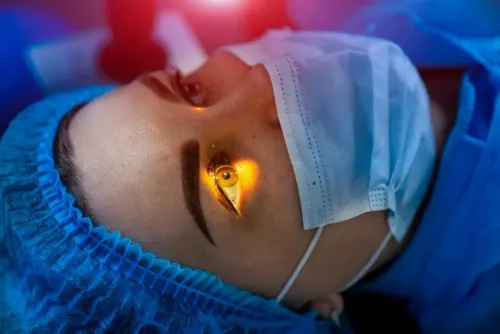
The visit may also cover myopia control, including outdoor time, reduced uninterrupted near work, specialised lenses or low-dose atropine. If cooperation is impossible and an important examination cannot otherwise be completed, examination under anaesthesia is reserved for selected cases, not used as a routine test.
How the examination changes with your child’s age
Age determines what a child can communicate and which tests will produce reliable results. Each eye must be assessed separately because a stronger eye can hide reduced vision in the other.
| Age | What the examination focuses on | When to assess |
|---|---|---|
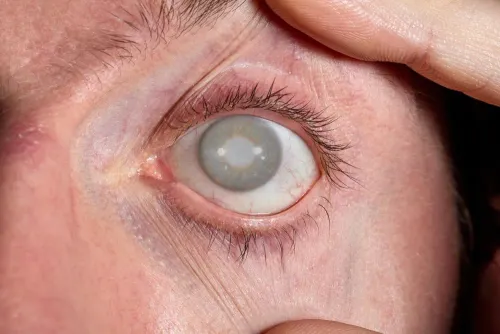
| Newborn | External eye check, pupils and red-reflex examination; unusual reflexes or eye structure need prompt investigation | At birth or before discharge; urgently for a white or yellow pupil |
| Infant | Fixation, following a face or light, eye alignment, movement and red reflex; drops may be needed for refraction | Routine screening at 6 months, or earlier for a concern |
| Toddler | Matching pictures or symbols when possible, alignment, movement and refractive error; cooperation guides the method | At 1–3 years, and sooner for squinting, head turning or poor visual attention |
| Preschool child | Picture or symbol acuity in each eye, colour and depth checks, alignment, eye health and cycloplegic refraction when indicated | At 3–5 years, before school if no reliable screening has occurred |
| School-age child | Letter acuity, focusing, alignment, eye health and reading-related symptoms; myopia control may be discussed | At school entry and after a failed screening or new symptoms |
| Teenager | Standard acuity, refraction, eye health and contact-lens or screen-use advice | Every 1–2 years, or promptly for headaches, blur or double vision |
Cycloplegic drops temporarily blur near vision and increase light sensitivity, but they prevent focusing effort from disguising long-sightedness or creating a false short-sighted prescription. Local child vision care in Charni Road should provide diagnostic follow-up after failed screening, not repeated home checks.
Which symptoms need an appointment, and which are urgent?
Book a routine appointment with a children eye doctor charni road if your child squints, sits unusually close to screens or books, closes one eye, tilts the head, rubs the eyes frequently, reports headaches after reading, or struggles at school. A drooping eyelid, unequal-looking eyes or a recurring squint also deserves assessment.
- Arrange testing even if your child says vision is normal. One eye can compensate for reduced vision in the other, so each eye must be checked separately.
- Ask whether refraction was measured after cycloplegia when your child is young, uncooperative, or has suspected amblyopia or strabismus. The drops temporarily blur near vision and can increase light sensitivity.
| Situation | Signs | What to do |
|---|---|---|
| Routine appointment | Squinting, head tilting, frequent rubbing, sitting close to screens, reading headaches, poor school performance or a drooping lid | Arrange a paediatric eye assessment rather than waiting for a school screening |
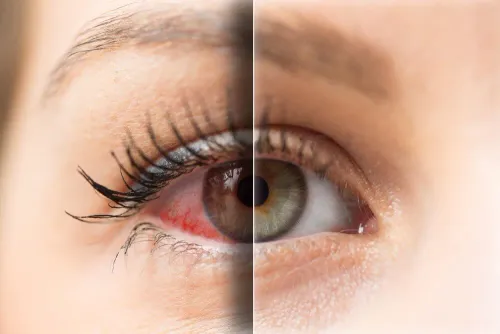
| Urgent assessment | A white or yellow pupil reflex in a photograph or ordinary light, a new fixed eye deviation, sudden vision loss, double vision, severe pain, marked redness with light sensitivity, or marked swelling | Seek urgent eye care; do not wait for a routine appointment |
| Injury or exposure | A cut, blow, foreign body or chemical entering the eye | Rinse chemical exposure with clean running water for at least 20 minutes and seek urgent assessment; do not rub or remove an embedded object |
Amblyopia, squint and refractive errors: what treatment may involve
A child can see normally with one eye while the other develops reduced vision, so each eye must be tested separately. A pediatric eye examination in Charni Road checks visual acuity, alignment, eye movements, pupils, red reflex, the front and back of the eye, and refraction.
Cycloplegic drops temporarily relax focusing; ask whether the prescription was measured after cycloplegia when your child is young, uncooperative, or has suspected amblyopia or strabismus.
| Condition | How it is detected | What management may involve |
|---|---|---|
| Amblyopia (lazy eye) | Unequal vision between eyes, often linked to different prescriptions, squint or a blocked visual axis | Correcting the cause with glasses, then patching or atropine penalisation of the better eye when indicated |
| Squint (misaligned eyes) | Cover testing, eye-movement assessment and alignment measurements | Glasses, monitoring, amblyopia treatment or squint surgery in selected cases |
| Short-sightedness | Distance vision testing and refraction | Prescription glasses and scheduled reviews |
| Long-sightedness | Refraction, often after cycloplegic drops | Observation or glasses, depending on amount, symptoms and alignment |
| Astigmatism | Refraction showing uneven focusing in different directions | Glasses and follow-up to confirm balanced visual development |
Glasses alone do not always reverse lazy eye because the brain may continue relying on the stronger eye. Treatment works best when prescribed consistently and reviewed as vision changes.
Child vision care in Charni Road should involve diagnostic follow-up after failed screening, not repeated home checks. If cooperation prevents a necessary examination, examination under anaesthesia is reserved for selected cases, not used as a routine substitute.
Choosing a local child eye assessment in Charni Road
Confirm that the appointment is a child-specific assessment, not an adult eye test with smaller frames. Ask whether the clinician will test each eye separately, check alignment and eye movements, examine the pupils and red reflex, and inspect the front and back of the eye.
| What to confirm | Why it matters | Question to ask |
|---|---|---|
| Cycloplegic refraction | Focusing effort can hide long-sightedness or create a false short-sighted prescription | Will drops be used, and will the prescription be measured after cycloplegia? |
| Follow-up plan | Amblyopia, squint and changing myopia need monitoring, not one isolated result | When will the child be reviewed? |
| Myopia options | Ordinary single-vision glasses are not the only possible approach | Will you discuss outdoor time, special lenses or low-dose atropine if suitable? |
| Cooperation limits | An incomplete examination leaves important problems unresolved | What happens if the child cannot complete the assessment? |
Searching for paediatric eye care for Charni Road should therefore include the test method, not just travel distance or appointment availability. Ask a children eye doctor Charni Road whether light sensitivity and temporary blurred near vision from drops will affect the rest of the day.
Dr Nusrat Bukhari's Eye Clinic fits this decision if it can explain which parts of the examination your child needs, how prescriptions are checked, and what follow-up will look like.
Do not book a routine visit for sudden vision loss, severe pain, an eye injury, marked redness with light sensitivity, or a new white pupil reflex. Seek urgent assessment instead.
Related service
Paediatric Eye Care Children require specialized eye care to support healthy vision development from infancy through adolescence. With over 21 years of experience, Dr. View service → |
Frequently asked questions
What happens during a paediatric eye examination?
The clinician asks about birth, development, family eye conditions and symptoms, then tests each eye separately and checks how the eyes work together.
When should my child see an eye doctor in Charni Road?
Arrange an appointment for persistent eye rubbing, headaches, squinting, school difficulties or a visible difference between the eyes. Seek urgent care for sudden vision loss, severe eye pain, injury, or a red swollen eye.
How does a child eye examination change with age?
Infants and young children are assessed with age-appropriate attention, fixation and picture-based tests. Older children can usually complete letter or symbol charts and describe symptoms more clearly.
How are amblyopia, squint and refractive errors treated?
Treatment depends on the cause and examination findings. It can include glasses, patching the stronger eye, prescribed eye drops, vision exercises or squint surgery.
Keywords