Parents in Worli can find childhood eye assessments, but the important question is whether the appointment provides medical paediatric ophthalmology rather than a basic spectacle test. By checking the clinician, examination scope, warning signs and practical booking details, you can choose the right appointment and prepare your child for it.
Key takeaways
- Confirm the clinic has a paediatric eye specialist before booking.
- Book an examination for squinting, poor school performance or suspected vision problems.
- Seek urgent care for a white pupil, eye injury, severe pain or sudden vision loss.
- Expect vision, eye alignment and eye-health checks during the appointment.
What kind of paediatric eye care is available in Worli?
Families can access genuine paediatric eye care in Worli and nearby South Mumbai, but confirm the clinician before travelling. Visiting days, surgical facilities and appointment availability change. An optical shop or adult eye-testing counter may provide spectacles without assessing childhood eye disease, visual development or squint.
| Optometrist | Tests vision and may prescribe spectacles where permitted | Routine sight testing and glasses |
|---|---|---|
| Ophthalmologist | Diagnoses eye disease, prescribes treatment and assesses surgery | Medical assessment, treatment or surgical advice |
| Paediatric ophthalmologist | Understands childhood visual development, squint and examinations for children who cannot read or describe symptoms | Infants, non-verbal children, amblyopia, unequal vision or alignment concerns |
A search for pediatric eye specialist Worli should lead to a clinician who routinely examines children, not merely a spectacle-dispensing service. Before booking paediatric eye care in Worli, ask:
- Does the appointment include infants and non-verbal children?
- Is cycloplegic refraction available, especially for first glasses, blurred vision, changing prescriptions, squint or suspected amblyopia?
- Is orthoptic or squint evaluation provided?
- Where would the child go for surgery or examination under anaesthesia?
A paediatric ophthalmologist or child-experienced ophthalmologist is the appropriate choice when a child has crossed eyes, unequal vision, persistent tearing, a drooping eyelid, abnormal head posture or suspected reduced sight.
Which children need an examination, and when should it happen?
Book an examination if your child has symptoms, a risk factor or an abnormal screening result. A routine school screening is not a substitute for a full eye examination, especially when arranging a child eye checkup worli families should choose a clinician experienced with children.
| Age or stage | Book an examination when | Timing |
|---|---|---|
| Newborn or infant | Unusual eye appearance, poor tracking, drooping eyelid, persistent tearing or a family history of childhood eye disease | Initial assessment in infancy; repeat sooner if a concern appears |
| Early childhood | A family history of squint, childhood cataract, glaucoma or high refractive error | Follow-up during early childhood |
| Preschool | The child has not had a complete assessment before starting school | Check before school begins |
| School age | The child fails school screening, struggles to read or reports headaches | Examine promptly, rather than waiting for the next screening |
| Teenager | Blurred vision, reading difficulty or a changing glasses prescription | Repeat when symptoms or prescription changes occur |
Arrange an examination even when the eyes look normal if you suspect amblyopia, unequal vision, squint or an abnormal head posture. Book again after an abnormal screening result, new symptoms or a newly identified family risk. A child eye checkup in Worli should assess visual development, not only whether the child can read a chart.
Which signs mean you should book urgently rather than wait?
Book a child eye assessment promptly if you notice an eye turning in or out, frequent squinting, unusually close screen or book use, recurring headaches, closing one eye, head tilting or turning, poor tracking, reading difficulty, persistent tearing, a drooping eyelid, or avoidance of visually demanding tasks.
A normal-looking eye does not exclude amblyopia. One eye can develop reduced vision when the brain receives weaker visual input, and early treatment works best during childhood. Persistent squint is therefore a visual-development problem, not only a cosmetic concern. Treatment may include spectacles, patching, blurring the stronger eye, or assessment for strabismus surgery.
For a children eye doctor Worli search, separate symptoms needing prompt assessment from emergencies:
| Symptom or finding | What to do | Why it matters |
|---|---|---|
| Eye turning, reading difficulty or abnormal head posture | Book a prompt assessment | Misalignment or unequal vision can affect visual development |
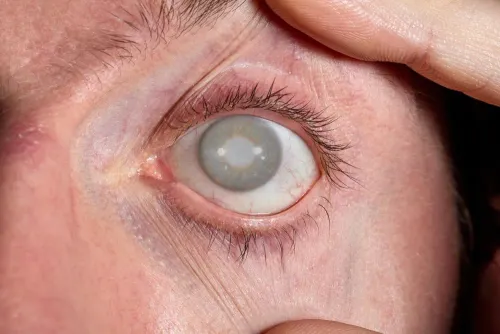
| White or abnormal pupil in a photograph | Seek urgent medical attention | It can signal serious retinal or lens disease |
| New-onset squint or sudden vision loss | Seek urgent medical attention | Sudden change needs immediate evaluation |
| Severe pain, serious injury or chemical exposure | Seek urgent medical attention | Injury can threaten sight |
| Red eye with light sensitivity | Seek urgent medical attention | Painful light sensitivity requires medical assessment |
For chemical exposure, rinse the eye continuously with clean running water while arranging emergency care. Do not wait for a routine appointment.
What happens during a child eye examination?
A child eye checkup in Worli starts with questions, not drops. Bring previous prescriptions, school-screening results, birth and medical history, developmental details, medicines, and family history of eye disease.
1. The clinician asks about symptoms, visual behaviour, premature birth, development, and relatives with squint, childhood cataract, glaucoma, or high refractive error.
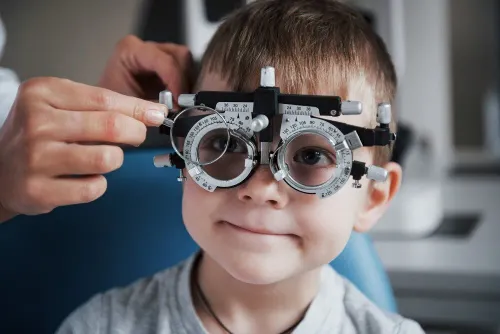
2. Vision is measured one eye at a time using an age-appropriate method. Children who cannot read letters may use picture charts, matching cards, preferential-looking methods, or objective measurements.
3. The examiner checks whether the eyes point together, follow a target, and move fully. This helps identify squint, poor coordination, or an abnormal head posture.
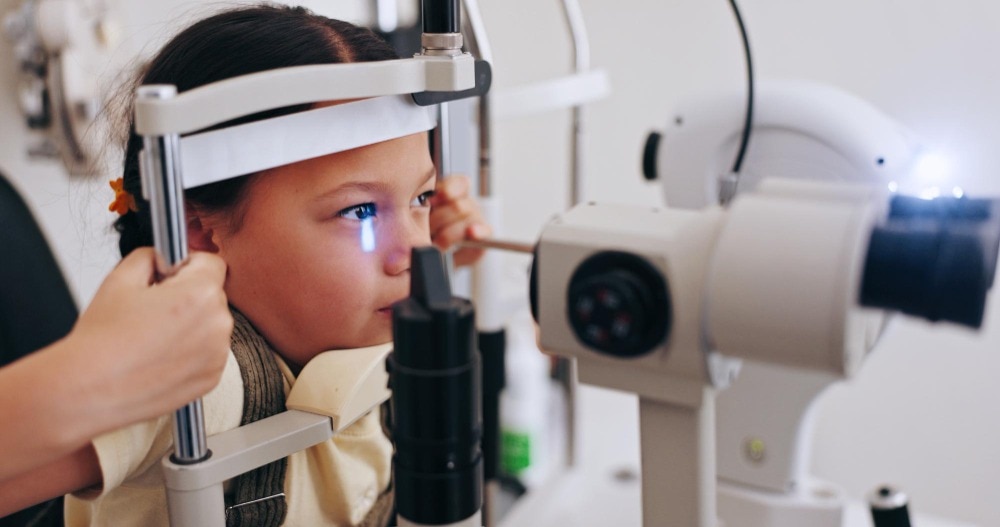
4. The pupils are examined for equal size and response to light. The front of each eye, including the cornea and lens, and the back of the eye, including the retina and optic nerve, are inspected.
5. Focusing and refraction are assessed to determine whether glasses are needed. Ask a pediatric eye specialist in Worli about cycloplegic refraction for first glasses, a changing prescription, blurred vision, squint, or suspected amblyopia.
Cycloplegic drops temporarily relax focusing. They can cause blurred near vision and light sensitivity after the visit, so ask how long the specific drops will last. Bring sunglasses and arrange transport support if vision is temporarily blurred. Not every child needs drops, so do not assume they are routine.
Colour-vision testing is added when age and symptoms make it useful.
How do you book a child eye checkup at a Worli clinic?
Before travelling, verify the exact address, nearest landmark, phone number and opening hours directly with Dr Nusrat Bukhari's Eye Clinic; those current details and paediatric availability for your requested day are not confirmed in the information available here.
Ask whether the appointment is with a clinician who routinely examines infants and non-verbal children, not only an adult eye-testing service.
Use this booking checklist:
- Confirm the Worli location, landmark, telephone booking channel, opening hours and the child clinician’s availability on your chosen date.
- Ask whether dilation, cycloplegic refraction and orthoptic or squint assessment are available on site.
- Ask where the clinic sends children who need surgery or examination under anaesthesia.
- Take previous spectacle prescriptions, school-screening results, birth and medical history, developmental information and a current medicines list.
- Report any family history of squint, childhood cataract, glaucoma or high refractive error.
A children eye doctor Worli search can return an optometrist, adult ophthalmologist or paediatric ophthalmologist, so confirm the professional’s role before booking. Paediatric eye care in Worli is the right choice when the visit includes childhood visual development and alignment assessment, not just spectacle measurement.
Referral is appropriate when examination shows a condition needing strabismus or other eye surgery, or when a young or uncooperative child cannot be examined reliably while awake and requires examination under anaesthesia.
Related service
Paediatric Eye Care Children require specialized eye care to support healthy vision development from infancy through adolescence. With over 21 years of experience, Dr. View service → |
Frequently asked questions
What kind of paediatric eye care is available in Worli?
Worli and nearby South Mumbai offer child eye examinations, vision assessment, squint evaluation, eye-health checks and corrective or surgical care. Confirm the clinician, visiting days and facilities before travelling.
Which children need an eye examination, and when should it happen?
Arrange an examination if your child squints, sits close to screens, struggles at school, complains of headaches or has a family history of childhood eye disease. Book sooner when you notice a change rather than waiting for a routine visit.
Which signs mean you should book urgently rather than wait?
Seek urgent assessment for sudden vision loss, a white-looking pupil, severe eye pain, an eye injury, marked redness with light sensitivity or a new persistent squint.
What happens during a child eye examination?
The clinician asks about symptoms and development, checks vision in each eye, assesses eye movement and alignment, examines the front and back of the eyes, and uses dilating drops when a fuller assessment is needed.
How do you book a child eye checkup at a Worli clinic?
Call the clinic and specifically request a paediatric eye appointment. Ask which clinician will examine your child, whether drops or previous reports are needed, and whether the clinic provides the care your child may require.
Keywords