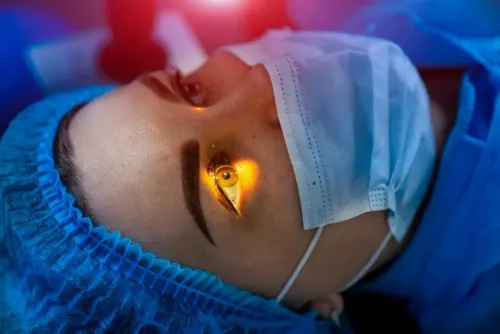
Sudden vision loss, a chemical splash, severe eye pain, a curtain-like shadow or an embedded object needs a different response from a routine eye appointment. Use the symptom-based pathway below to decide whether to call emergency services, go straight to a hospital, or seek same-day ophthalmology care, then prepare for the assessment without worsening the injury.
Key takeaways
- Treat sudden vision loss, chemical splashes and penetrating injuries as emergencies.
- Flush a chemical-exposed eye with clean water for at least 20 minutes.
- Do not drive with impaired vision; record when symptoms started.
- Take medication details and injury information to the urgent eye assessment.
Which sudden eye symptoms need emergency help near Kemps Corner?
Sudden vision loss, a curtain-like shadow, penetrating injury, chemical exposure, severe pain with nausea, or new neurological symptoms requires emergency assessment—not a routine appointment. Do not drive if vision is impaired. Record the exact time symptoms began.
| Route | Red flags | What to do |
|---|---|---|
| Emergency services | Vision loss with facial weakness, speech difficulty, confusion, severe headache, or new double vision | Call emergency services; these signs can indicate stroke or serious neurological disease. |
| Hospital emergency department | Chemical splash, metal or glass injury, embedded object, visibly distorted pupil, rapidly worsening vision, markedly unequal pupils, or suspected orbital fracture | Rinse chemical exposure immediately, avoid rubbing or pressing the eye, and seek hospital care. Surgery, imaging, or specialist referral may be needed. |
| Urgent ophthalmology | Severe eye pain with halos, light sensitivity, nausea or vomiting; new flashes with a sudden shower of floaters; or a painless curtain-like field defect | Obtain same-day, preferably immediate, ophthalmic assessment. A retinal tear, retinal detachment, or acute angle-closure glaucoma can worsen before pain appears. |
For emergency eye care near Kemps Corner, ask whether the service can perform slit-lamp, intraocular-pressure and dilated retinal examinations, and arrange immediate hospital transfer. A search for emergency ophthalmologist Kemps Corner is not enough: confirm where patients go if open-globe trauma, a chemical burn, or surgery is suspected.
Use a rigid shield without pressure for an embedded object; do not remove it or apply an eye pad.
What should you do immediately after an eye injury or chemical splash?
Chemical exposure demands irrigation before travel: hold the eyelids open and flush continuously with clean, lukewarm running water or saline for at least 20 minutes. Remove contact lenses while rinsing if they come out easily. Do not wait to identify the chemical or try to neutralise an acid with an alkali.
| Injury | Protect the eye now | Avoid |
|---|---|---|
| Chemical splash | Keep flushing, then seek emergency assessment | Rubbing, drops, ointment, or stopping to find the product label |
| Penetrating injury or embedded metal/glass | Do not touch the object; place a rigid shield over the eye without pressure and go to a hospital | Removing it, pressing on the eye, patching with a soft pad, eating or drinking if surgery may be needed |
| Loose foreign body | Blink and rinse with clean water or saline; arrange examination if pain, redness or blurred vision remains | Rubbing, tweezers, cotton buds, or home anaesthetic drops |
| Blunt trauma | Use a cold compress around the closed eyelid without pressing and obtain urgent assessment | Ice directly on the eye, pressure, or driving with impaired vision |
| Cut or thermal burn | Cover loosely with a clean shield; rinse a surface burn with clean water and seek emergency care | Applying ointment, pressing a cut, or removing embedded material |
Do not rub or press any injured eye. Sudden vision loss, a distorted pupil, severe pain, or worsening sight needs hospital care rather than routine urgent eye care near Kemps Corner. Ask for sudden eye problem treatment Kemps Corner only if the service can arrange immediate ophthalmic or surgical referral.
Which painful, red or suddenly blurred eye problems need same-day review?
A red, painful eye in a contact-lens wearer needs same-day ophthalmic review. Remove the lens, do not reuse it, and do not use leftover antibiotic or steroid drops. Microbial keratitis can form a corneal ulcer and permanently reduce vision.
| Problem | What to do | When it applies |
|---|---|---|
| Contact-lens pain, redness or discharge | Remove the lens and arrange urgent examination | Same day; worsening vision or severe pain means emergency care |
| Scratch, tearing or pain worse on blinking | Do not rub or use anaesthetic drops; request fluorescein staining and slit-lamp examination | Same day, especially after metal, dust or fingernail injury |
| UV exposure with pain, light sensitivity or blurred vision | Stop exposure, avoid rubbing, and obtain ophthalmic review | Same day if symptoms persist or vision changes |
| Blunt injury | Seek examination even without a visible wound | Emergency care for reduced vision, distorted pupil, severe pain, vomiting or double vision |
| Flashes, sudden floaters or a curtain-like shadow | Request a dilated retinal examination | Urgently; retinal detachment is often painless |
For urgent eye care Kemps Corner, do not judge severity by redness alone. Sudden eye problem treatment Kemps Corner should include a dilated retinal check for new flashes or vision change, not reassurance that it is eye strain.
Do not start steroid or antibiotic-steroid combination drops before examination; they can worsen infection, mask herpes keratitis and raise eye pressure.
What happens during an urgent eye assessment, and how much time should you allow?
Allow at least two to four hours, not the time of a routine appointment. Travel from your location, registration and triage come first; a patient with severe pain, sudden vision loss or suspected open-globe injury may be seen ahead of less urgent cases.
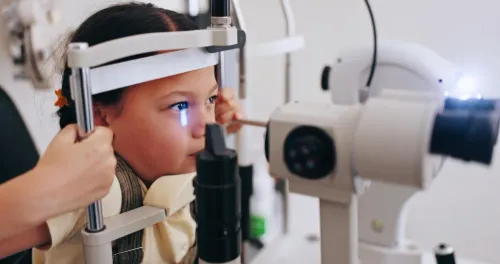
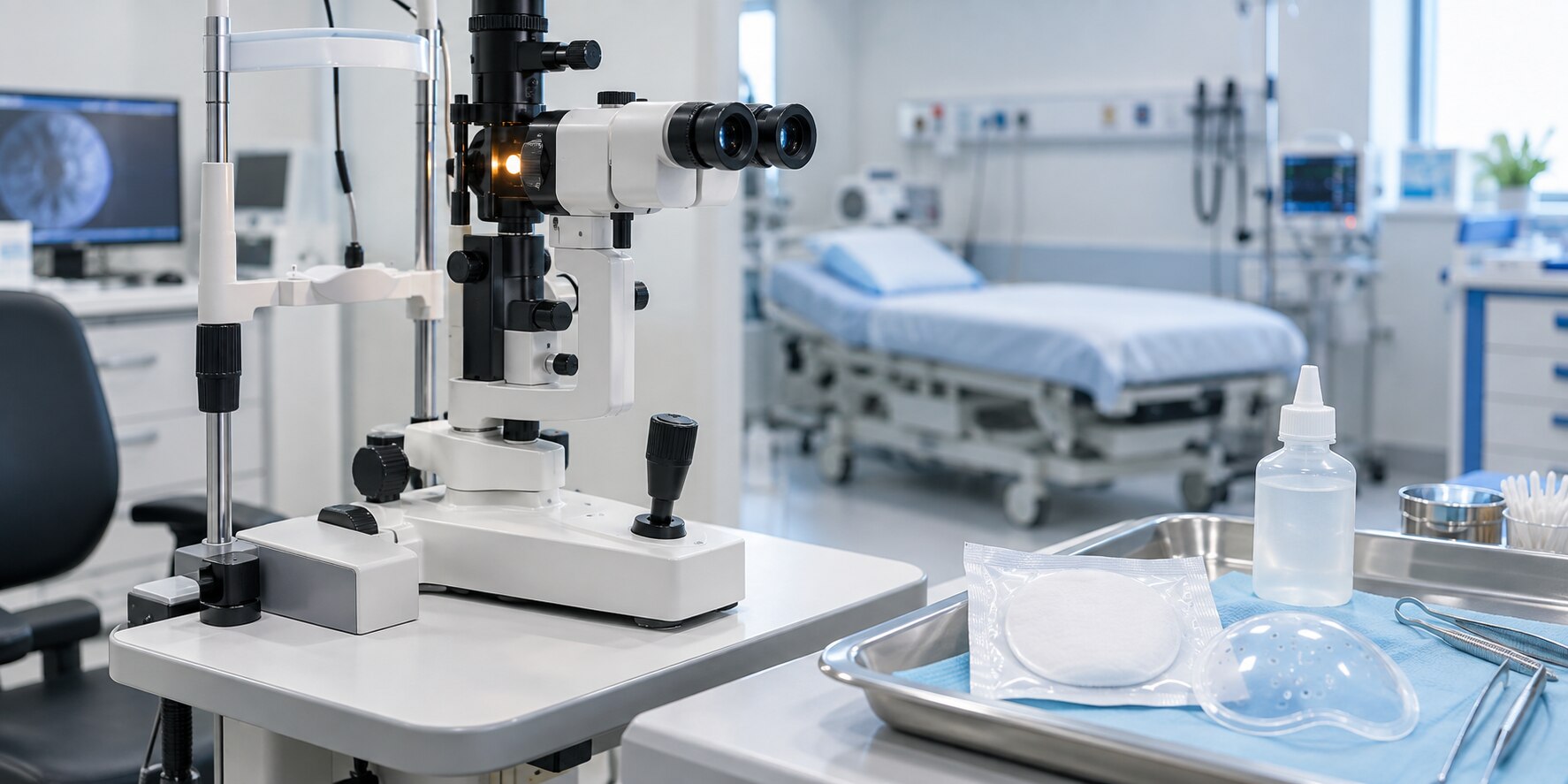
An emergency ophthalmologist Kemps Corner assessment may include:
- Visual-acuity testing, pupil reactions, colour vision and eye-movement checks
- Slit-lamp examination with fluorescein to identify a corneal abrasion, ulcer, foreign body or chemical damage
- Intraocular-pressure measurement when an open-globe injury is not suspected
- Dilation and a retinal examination for flashes, floaters, a curtain-like shadow or unexplained vision loss
- Ocular ultrasound, CT imaging or neurological assessment when the retina, orbit, optic nerve or brain needs evaluation
Bring the time symptoms began, how they changed, the injury mechanism, the chemical container or product name, contact lenses, spectacles, medication and allergy lists, and details of diabetes, glaucoma or previous eye surgery. Do not drive if your vision is impaired.
Dilation can blur near vision and increase waiting time while both eyes are examined. If the clinic suspects an open-globe injury, orbital fracture, severe chemical burn, infection requiring intravenous treatment or a surgical problem, it may arrange immediate hospital transfer. Surgery, anaesthesia assessment and imaging add further time.
Ask whether the service can provide the tests and referral pathway needed for sudden eye problem treatment Kemps Corner.
How should you choose emergency eye care near Kemps Corner?
Before contacting emergency eye care for kemps corner, call and verify that the service accepts same-day eye emergencies, has an ophthalmologist available, and can perform slit-lamp examination, intraocular-pressure measurement and a dilated retinal examination.
Ask whether it can arrange immediate hospital transfer, imaging or eye surgery; the word “emergency” in a listing proves none of these.
Use this quick check:
- Ask about the examination and referral facilities, not just appointment availability.
- Tell the clinician about sudden vision loss, a curtain or shadow, new flashes and floaters, severe pain with nausea or halos, chemical exposure, a penetrating injury, double vision, unequal pupils, facial weakness or severe headache.
- Do not drive if your vision is impaired. Do not delay hospital care while comparing clinics.
| Where to go | What it can handle | When it applies |
|---|---|---|
| Hospital emergency department | Suspected open-globe injury, chemical burn, orbital fracture, neurological symptoms, rapidly worsening vision, or cases needing imaging, anaesthesia or surgery | Go directly, or ask the eye service to transfer you immediately |
| Urgent ophthalmology service | Same-day assessment for a painful red eye, contact-lens complication, corneal injury, flashes or floaters, or raised eye pressure | Use when hospital-level danger is not suspected and the service can escalate |
| Routine clinic | Stable irritation, longstanding blur or mild symptoms without sudden change | Not suitable for emergency warning signs |
Dr Nusrat Bukhari's Eye Clinic can fit the middle option when it confirms same-day ophthalmic assessment and a clear hospital-referral pathway; choose the hospital first if those facilities are unavailable or your symptoms suggest immediate surgical risk.
Related service
Emergency Eye Care Dr. Nusrat Bukhari provides prompt and reliable Emergency Eye Care for patients experiencing sudden or serious eye problems. View service → |
Frequently asked questions
Which sudden eye symptoms need emergency help near Kemps Corner?
Seek emergency assessment for sudden vision loss, a curtain-like shadow, a penetrating injury, chemical exposure, severe eye pain with nausea, or new neurological symptoms. Do not drive if your vision is impaired.
What should you do immediately after an eye injury or chemical splash?
After a chemical splash, rinse the eye continuously with clean running water for at least 20 minutes and remove contact lenses during rinsing if they come out easily. Do not rub the eye or try to remove an embedded object; cover it loosely and seek emergency care.
Which painful, red or suddenly blurred eye problems need same-day review?
Arrange same-day ophthalmic review for severe pain, sudden blurred vision, marked redness, light sensitivity, halos around lights, new floaters or flashes, or symptoms after trauma. Pain with nausea, vision loss or neurological symptoms requires emergency assessment.
What happens during an urgent eye assessment, and how much time should you allow?
The clinician records your symptoms and timing, checks visual acuity, pupils, eye pressure and the front and back of the eye, and may use dilating drops or imaging. Allow enough time for examination, drops and observation; dilated vision can remain blurred for several hours.
How should you choose emergency eye care near Kemps Corner?
Choose a service that provides ophthalmologist-led assessment, slit-lamp examination, eye-pressure measurement, retinal evaluation and treatment or referral for injuries. Confirm its emergency hours, location, access for a companion and whether it can manage chemical injuries or suspected retinal problems.
Keywords