
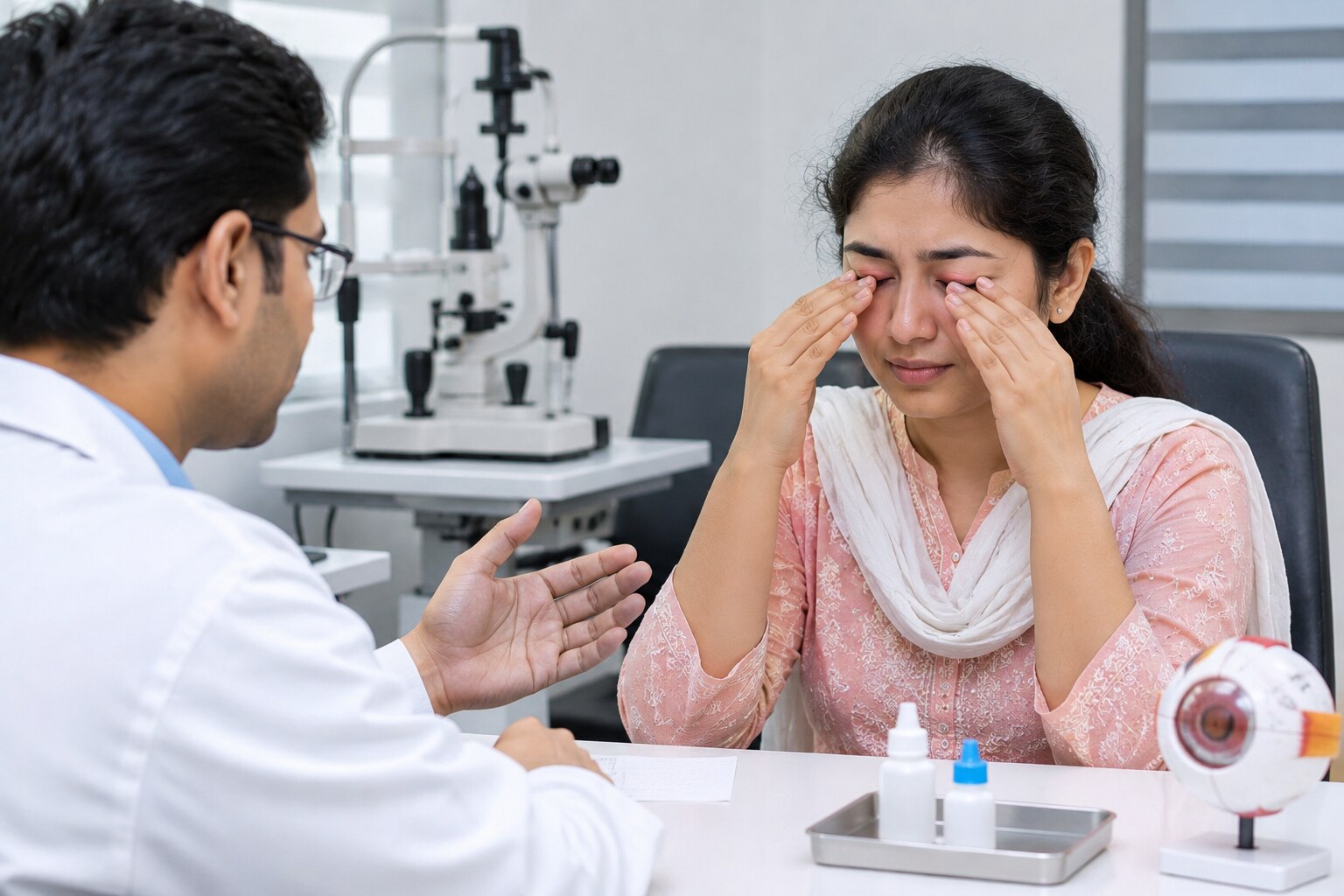
Burning eyes do not automatically mean an eye allergy: itching, watery discharge and sneezing point in one direction, while pain, thick discharge or blurred vision point elsewhere. You will be able to compare likely causes, take safe first steps, recognise warning signs and decide when allergy care is appropriate.
Key takeaways
- Itching in both eyes with sneezing points more strongly to allergy.
- Compare dust, pollen, pollution, pets, cosmetics and contact-lens exposure.
- Use preservative-free artificial tears and avoid rubbing before assessment.
- Seek prompt care for pain, light sensitivity, vision changes or injury.
Does the Pattern of Symptoms Point to an Eye Allergy?
Itching is the strongest clue for an eye allergy. Eye allergy symptoms usually include itchy eyes, redness, watery eyes and sneezing, with both eyes affected. Allergic conjunctivitis is usually bilateral and not contagious. Burning eyes alone do not prove allergy.
| Pattern | More likely explanation | Clues that separate it |
|---|---|---|
| Allergy | Allergic conjunctivitis | Itching dominates; both eyes water and symptoms accompany sneezing |
| Dry eye | Tear-film irritation | Burning, grittiness or fluctuating blur after screens, air conditioning or reduced blinking |
| Blepharitis | Inflamed eyelid margins | Crusts, flakes, swollen lids or irritation concentrated along the lashes |
| Viral infection | Viral conjunctivitis | Redness may begin in one eye and spread; watery discharge and recent contact with illness are common |
| Bacterial infection | Bacterial conjunctivitis | Thick yellow or green discharge that sticks the lids together |
| Contact-lens irritation | Lens-related surface inflammation | Redness and discomfort after lens wear; remove lenses immediately |
| Foreign body or corneal injury | Surface damage | A local gritty sensation, marked pain, light sensitivity, reduced vision or a white spot on the cornea |
Thick discharge, marked pain, light sensitivity, reduced vision, a strongly one-sided red eye or a white corneal spot make allergy less likely and need a different assessment. Contact-lens wearers need prompt care because keratitis can threaten vision. Do not rub the eye or resume lenses while it remains red, painful or irritated.
Which Mumbai Triggers Should You Compare Before Choosing Allergy Care?
Compare each suspected exposure with a repeatable symptom pattern, not a single bad day. Mumbai eye allergy triggers become more convincing when both eyes itch, water or swell soon after exposure and improve away from it.
| Trigger | Pattern that supports a link | Practical comparison |
|---|---|---|
| Dust | Itching and watering after sweeping, travel or dusty rooms | Reduce dust for several days and observe |
| Vehicle pollution | Burning, itching or watering after traffic exposure | Note symptoms after commuting |
| Construction particles | Sudden irritation near construction dust | Avoid the area; seek care if grit remains |
| Humidity | Symptoms in damp rooms or during humid weather | Check for indoor dampness |
| Air conditioning | Burning after entering a cooled room | Consider dry ocular surface, especially after screen use |
| Mould allergy eyes | Itching and watering in damp or musty spaces | Inspect for visible mould and leaks |
| Seasonal pollen | Bilateral itching and sneezing during a recurring season | Keep windows closed during high-pollen periods |
Exposure clues help only when they match the symptom pattern. Burning after prolonged screen use or time in air conditioning may reflect reduced blinking and dry eye, not allergy.
- Reduce dust exposure and avoid rubbing your eyes.
- Wash your face and hair after outdoor exposure.
- Keep windows closed during high-pollen periods.
Avoidance does not replace an examination if symptoms persist, recur without a clear trigger, or affect vision.
What Can You Do Safely Before You Are Examined?
Stop rubbing your eyes; rubbing drives allergens deeper into the tear film and can scratch the cornea. If dust or another irritant entered the eye, rinse with clean running water, then place a cool compress over closed eyelids.
1. Remove contact lenses immediately. With contact lenses and red eyes, do not resume lens wear while the eye remains red, painful or irritated. Contact-lens-related keratitis can begin like ordinary conjunctivitis, but infection of the cornea can scar it and threaten vision.
2. Ask a pharmacist or clinician whether preservative-free lubricating drops suit your symptoms. They can wash allergens from the eye and reduce surface irritation, especially when you need drops repeatedly.
3. Ask whether allergy-directed drops containing an antihistamine, a mast-cell stabiliser or both fit the diagnosis. Burning alone does not prove allergy, so do not choose a treatment solely from the symptom.
4. Avoid repeated use of vasoconstrictor redness-relief eye drops. These redness-relief eye drops can produce rebound redness and do not treat allergic inflammation.
5. Do not use antibiotic eye drops to treat allergy. They do not remove allergic inflammation and may add irritation or delay the correct assessment.
6. Never start steroid eye drops without an ophthalmologist’s prescription and monitoring. Steroids can worsen undiagnosed infections and raise eye pressure.
Seek prompt assessment instead of self-treating if pain, light sensitivity, reduced vision, a white corneal spot or marked discharge develops. Persistent burning also deserves review, because dry-eye irritation can remain after allergy-related itching improves.
When Do Burning Eyes Need Prompt Assessment, and What Will the Visit Involve?
Severe pain, light sensitivity, vision changes, or a visibly abnormal cornea should not wait for routine allergy care. Seek prompt assessment for any of these features:
| Feature | Why it needs prompt assessment |
|---|---|
| Severe pain or light sensitivity | May indicate corneal or intraocular inflammation |
| Reduced or blurred vision | Signals more than surface redness |
| Marked one-sided red eye | Makes simple allergy less likely |
| White spot on the cornea | May indicate a corneal ulcer or infection |
| Significant discharge | Can point to bacterial infection |
| Injury or foreign-body sensation | A scratch or retained particle may need removal |
| Chemical exposure to the eye | Chemical burns can worsen after the initial incident |
An ophthalmology visit starts with your symptom history, including onset, triggers, discharge, contact-lens use and any injury. The clinician then performs a visual acuity test, a slit-lamp examination, eyelid and tear-film assessment, and contact-lens review.
Fluorescein staining places a temporary orange dye on the eye so cobalt-blue light can reveal corneal scratches, foreign bodies, keratitis and dry-eye-related surface damage. Redness alone cannot show these problems.
If you need urgent eye assessment Mumbai, Dr Nusrat Bukhari's Eye Clinic is one option for a structured examination when the cause remains uncertain. Do not assume allergy simply because the eye is red or burning; prompt examination matters most when pain, discharge or vision changes are present.
Related service
Dry Eye & Allergy Eye Treatment Dry Eye & Allergy Eye Treatment by Dr. Nusrat Bukhari Dryness, redness, itching, and irritation of the eyes are common concerns that can affect daily comfort and vision quality. View service → |
How Is Allergy Care Different From Dry-Eye Care?
Choose allergy-focused care when itching, watering in both eyes and a plausible trigger dominate without warning signs. Seek evaluation for another cause when pain, discharge or vision changes dominate.
| Option | Main target | Clues it fits |
|---|---|---|
| Allergy care | Allergic inflammation | Itching, bilateral watering, sneezing or exposure-related flares |
| Dry-eye care | The tear film and ocular surface irritation | Burning, gritty discomfort, fluctuating vision or symptoms after screens and air conditioning |
| Another assessment | Infection, injury or corneal disease | Marked pain, thick discharge, light sensitivity, reduced vision or a one-sided red eye |
Allergy-directed drops may contain an antihistamine, a mast-cell stabiliser or both. Dry-eye care instead supports the tear film with suitable lubricants and reduces ocular surface irritation; treatment for one does not automatically correct the other.
Coexisting allergy and dry eye is common. Air conditioning, prolonged screen use, smoke and particulate exposure can keep burning present after itching improves, so escalating allergy drops may miss a separate dry-eye problem.
Review every product touching your eyes, including lubricants, allergy drops and cosmetic eye products. Repeated exposure to preservatives or irritating ingredients can worsen symptoms, especially when you use drops frequently; ask a clinician whether preservative-free products are appropriate.
Persistent burning after allergy symptoms settle deserves reassessment rather than repeated escalation of one generic drop.
Frequently asked questions
How can you tell whether burning eyes point to an allergy?
Itching is the strongest clue. Allergy usually causes itchy, red, watery eyes with sneezing, affects both eyes and is not contagious. Burning alone does not prove allergy.
Which Mumbai triggers should you compare before choosing allergy care?
Review exposure to dust, pollen, air pollution, pets, cosmetics, cleaning products, fans, air conditioning and contact lenses. Note when symptoms start and whether they improve away from the trigger.
What can you safely do before your eyes are examined?
Avoid rubbing and suspected triggers, remove contact lenses, rinse irritants with clean water and use preservative-free artificial tears. Do not use someone else’s eye drops or leftover antibiotic drops.
When do burning eyes need prompt assessment?
Arrange prompt assessment for eye pain, light sensitivity, reduced or blurred vision, marked swelling, discharge, a chemical splash, an eye injury or symptoms in one eye after contact-lens use.
How is allergy care different from dry-eye care?
Allergy care focuses on itching, exposure control and allergy-directed treatment. Dry-eye care focuses on tear-film support, screen and airflow habits, contact-lens review and identifying causes of evaporation or reduced tears.