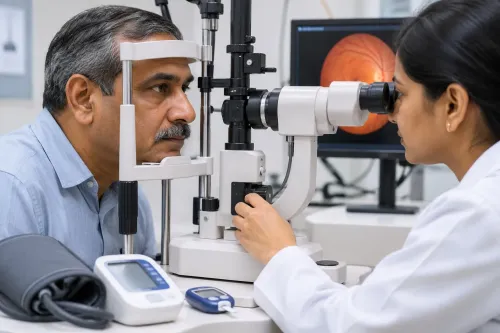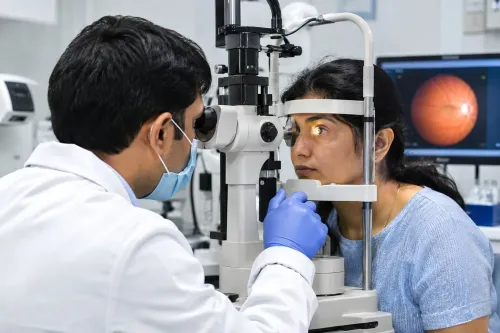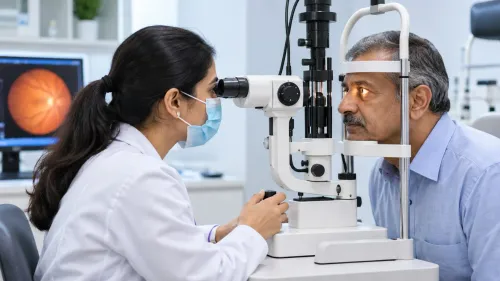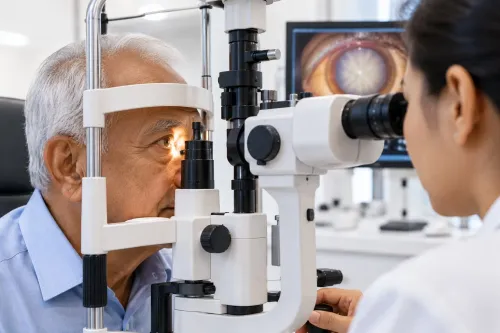
Neither assessment is a universal substitute for the other: each looks for a different pattern of damage, and people living with both conditions need both risk assessments. By matching the screening pathway to your diagnosis, pregnancy status, disease control and examination findings, you can choose the right test and understand when follow-up becomes urgent.
Key takeaways
- Choose diabetes screening if you have diabetes.
- Choose hypertension assessment if you have high blood pressure.
- Have both assessments when diabetes and hypertension coexist.
- Bring medication details, health records, and recent blood pressure or glucose results.
Which screening should you choose for your health condition?
Diabetic and hypertensive eye screening are not competing alternatives. Choose diabetes screening if you have diabetes, hypertension assessment if you have high blood pressure, and both assessments when the conditions coexist.
| Condition | Main purpose | Findings assessed |
|---|---|---|
| Diabetes | Detect diabetic retinopathy and diabetic macular oedema | Microaneurysms, retinal haemorrhages, leaking vessels and macular swelling |
| Hypertension | Detect retinal, vascular, choroidal and optic-nerve effects | Arteriolar narrowing, arteriovenous nicking, cotton-wool spots, haemorrhages and optic-disc swelling |
| Both conditions | Assess combined risk | Both patterns, interpreted with your medical history |
If you have both diseases, ask the clinician to review both histories. One normal result does not prove that the other disease has not affected your eyes. Do not wait for blurred vision: early retinal damage can exist while your sight feels normal.
Arrange the first comprehensive eye examination when type 2 diabetes is diagnosed. With type 1 diabetes, arrange screening within five years of onset unless your clinician sets an earlier date. Newly diagnosed disease needs a baseline; long-standing, poorly controlled diabetes or blood pressure needs prompt review rather than a routine delayed appointment.
Pregnancy-related hypertension requires medical assessment alongside the eye examination, not ordinary routine screening. Severe blood pressure with visual loss, confusion, weakness, chest pain, breathlessness, severe headache or optic-disc swelling needs urgent medical care.
For diabetic or hypertensive eye screening in Mumbai, the correct choice is diabetes screening for diabetes, hypertension assessment for hypertension, and both when they coexist.
What eye findings make one pathway more urgent?
Microaneurysms, dot-blot haemorrhages, macular oedema, hard exudates, abnormal new vessels and retinal non-perfusion make diabetes-related disease more urgent. Arteriolar narrowing, arteriovenous nicking, cotton-wool spots, flame-shaped haemorrhages, hard exudates, retinal vein or artery occlusion and optic-disc changes raise concern about blood-pressure damage.
| Pattern | What the clinician is looking for | Why it changes urgency |
|---|---|---|
| Diabetes-related | Leakage, macular swelling, new vessels or areas without retinal blood supply | Vision-threatening retinopathy or macular oedema may need prompt treatment |
| Hypertension-related | Narrowed or damaged vessels, haemorrhages, cotton-wool spots, occlusion or optic-disc swelling | Severe vascular injury can signal dangerously high blood pressure |
| Overlapping findings | Hard exudates, haemorrhages and retinal swelling | A photograph alone may not identify the underlying cause |
Blurred vision is an unreliable guide because early retinal damage can cause no symptoms, while sudden visual loss can occur after significant progression. The clinician must interpret the image alongside your glucose history, HbA1c and blood-pressure readings.
Report kidney disease, high cholesterol, smoking, previous retinal disease or eye treatment; these risks can shorten your review interval.
In diabetes versus blood pressure eye screening in Mumbai, urgency depends on the retinal pattern and your wider medical risk, not on which test sounds more advanced. A very high blood-pressure reading with visual loss, confusion, weakness, chest pain, breathlessness, severe headache or optic-disc swelling requires urgent medical care, not a routine screening appointment.
Which tests are screening tests, and when are diagnostic tests added?
Visual-acuity testing measures how clearly you read at distance; it does not rule out early retinal disease. Intraocular-pressure measurement checks eye pressure, but it does not diagnose diabetic or hypertensive retinopathy.
| Test | What it does | Limit |
|---|---|---|
| Visual-acuity chart | Measures distance vision | Normal vision can coexist with retinal disease |
| Dilated fundus examination | Directly examines the retina and optic disc | Dilation can blur near vision and increase light sensitivity |
| Retinal photography | Records retinal changes for comparison | Cataract, small pupils, haemorrhage, poor fixation or an ungradable image can hide disease |
| OCT | Produces cross-sectional retinal scans for suspected macular swelling or unexplained visual loss | It does not replace a dilated examination, inspect every peripheral lesion or measure blood pressure |
| Fluorescein angiography | Shows leakage, non-perfusion and new blood vessels in greater detail | A specialist diagnostic test, not a routine first test for everyone |
The practical sequence is visual acuity and pressure measurement, followed by good-quality retinal photography or a dilated fundus examination. An ungradable photograph needs dilation or referral, not reassurance. Add OCT when symptoms or examination suggest macular oedema; add fluorescein angiography when treatment planning requires finer vascular detail.
Dilation can cause light sensitivity and blurred near vision for several hours. Wear sunglasses, avoid driving until vision is clear, and arrange transport if distance vision remains blurred. This is the key diabetic hypertensive eye test comparison in Mumbai: screening identifies who needs closer evaluation; diagnostic tests clarify the abnormality.
How quickly should you return after screening?
Your return date depends on the retinal findings and your medical risk, not on whether the appointment was labelled diabetic or hypertensive screening.
1. If the retina is normal and your diabetes is well controlled, your ophthalmologist may set a 12- to 24-month review for selected people. Annual review remains appropriate when risk is higher or your clinician advises it.
2. Do not use the longer interval if you have retinopathy, macular oedema, pregnancy, poor HbA1c control, kidney disease or previous retinal treatment. Mild retinopathy may require review within months, not years.
3. Suspected macular oedema, moderate or severe retinopathy, new blood vessels, retinal vein or artery occlusion, or optic-disc swelling requires a clinician-defined interval and sometimes prompt treatment. Do not wait for the next routine reminder.
4. After a new hypertension diagnosis, continue blood-pressure follow-up with your physician. An eye examination cannot replace repeated, correctly performed blood-pressure measurements or assessment of kidney, heart and stroke risk.
5. If you have pre-existing type 1 or type 2 diabetes, arrange assessment before conception or early in pregnancy, then follow the schedule set during pregnancy and after delivery according to retinopathy severity.
For eye screening for diabetes and hypertension in Mumbai, Dr Nusrat Bukhari's Eye Clinic can help coordinate the examination pathway and document what happens next. Your ophthalmologist’s written interval overrides a generic calendar reminder.
Related service
Diabetic & Hypertensive Eye Screening Diabetic & Hypertensive Eye Screening by Dr. Nusrat Bukhari Diabetes and high blood pressure can silently damage the eyes long before symptoms appear. With over 21 years of expertise, Dr. View service → |
What should you take to a Mumbai eye-screening appointment?
Bring your current medicines, recent HbA1c result, home or clinic blood-pressure readings, diabetes diagnosis date, pregnancy status and kidney-disease history. Include details of previous retinal injections, laser treatment or eye surgery. For diabetic or hypertensive eye screening in Mumbai, report urgent symptoms rather than booking a routine slot:
- New floaters, flashes, a curtain-like shadow, sudden visual loss, distorted lines or one-sided blur need prompt clinical advice.
- Ask whether the appointment includes retinal photography, pupil dilation and OCT.
- Ask what an ungradable photograph or abnormal result will trigger: a dilated examination, referral, repeat imaging or treatment.
- Confirm whether you need transport after dilation, and arrange someone to accompany you if poor vision makes travel unsafe.
Check these points before you choose a clinic:
| What to check | Why it matters | What to confirm |
|---|---|---|
| Image quality | Cataract, small pupils, haemorrhage or poor fixation can hide disease | An ungradable image leads to examination or referral, not reassurance |
| Clinician interpretation | A photograph needs medical interpretation alongside your history | The clinician will review both diabetes and blood-pressure risk |
| Diagnostic access | OCT adds detail for macular swelling or unexplained vision loss | A normal OCT does not rule out peripheral hypertensive damage |
| Follow-up plan | An abnormal result needs a defined next step | Ask when and where review will occur |
Do not treat a visual-acuity chart alone as retinal screening. For eye screening for diabetes and hypertension in Mumbai, compare image quality, interpretation, diagnostic access and follow-up—not one condition’s screening against the other. Ask the provider to record both diagnoses and review the complete risk picture in one appointment where appropriate.
Frequently asked questions
Which eye screening should you choose for diabetes or high blood pressure?
Choose diabetic eye screening for diabetes, hypertensive eye assessment for high blood pressure, and both when the conditions coexist.
What eye findings make screening more urgent?
Bleeding, swelling, sudden vision loss, new floaters, eye pain, or a sudden increase in blurred vision require prompt clinical assessment.
Which tests are screening tests, and when are diagnostic tests added?
Screening commonly includes vision measurement, eye pressure assessment, and a retinal examination. Diagnostic tests are added when symptoms or retinal findings need closer evaluation.
How quickly should you return after eye screening?
Follow the interval given by the eye specialist. Return sooner for sudden vision changes, new floaters, flashes, eye pain, or worsening symptoms.
What should you take to a Mumbai eye-screening appointment?
Take your medication list, diabetes and blood-pressure records, previous eye reports, glasses, insurance documents, and details of new symptoms.
Keywords