Diabetes and high blood pressure can injure the retina through different mechanisms, so having both conditions raises the chance of finding more than one sight-threatening problem. By the end, you will know which eye diseases matter, when to book screening, what the appointment can include, and which results need prompt medical action.
Key takeaways
- Schedule a dilated retinal examination after diabetes diagnosis and follow your clinician’s interval.
- Keep blood glucose and blood pressure controlled to reduce retinal vessel damage.
- Bring medication details, previous eye reports, and recent glucose and blood pressure readings.
- Seek urgent eye care for sudden vision loss, flashes, floaters, or a curtain-like shadow.
Why diabetes and high blood pressure create a higher eye risk together
Diabetes and high blood pressure together put the retina under two damaging forces: excess glucose injures small vessel walls, while pressure strains those vessels from inside. They can then narrow, leak, close off or bleed, starving retinal tissue of oxygen. Damage may progress while your vision still measures 6/6 or 20/20.
The combined injury can appear as:
- Diabetic retinopathy, in which damaged retinal vessels leak or grow fragile new vessels that bleed.
- Diabetic macular oedema, when fluid collects in the macula and blurs detailed central vision.
- Hypertensive retinopathy, marked by narrowed arterioles, haemorrhages, cotton-wool spots or hard exudates.
- Retinal vein occlusion, in which a blocked retinal vein causes swelling and bleeding.
- Cataract, whose risk rises with diabetes and can cloud the lens.
- Glaucoma, where optic-nerve damage causes permanent field loss; diabetes and vascular disease can increase concern.
High blood pressure also raises the chance that diabetic retinopathy will worsen. Severe pressure can swell the optic disc, a finding requiring urgent medical assessment rather than routine screening. Managing blood pressure protects the retina but does not replace retinal examinations.
For diabetic adults, high blood pressure makes eye screening more important even after a normal result. The diabetic eye screening benefits come from finding vessel leakage, macular oedema and early retinopathy before symptoms appear, then repeating assessment as advised. A normal visit records what was absent that day; it does not remove future risk.
Who needs screening and when should it be repeated?
Adults with type 2 diabetes need a dilated, comprehensive eye examination when diabetes is diagnosed. Adults with type 1 diabetes need their first examination within five years of diagnosis. Do not wait for blurred vision: early retinopathy and macular oedema can develop without symptoms.
| Group | First or baseline examination | Repeat schedule |
|---|---|---|
| Type 1 diabetes | Within five years after diabetes begins | Usually every year; extend to every one or two years only after repeated normal exams and glucose within the recommended range |
| Type 2 diabetes | At the time diabetes is diagnosed | Usually every year; shorten the interval when retinopathy is present |
| Gestational diabetes alone | No routine diabetic-retina examination solely for gestational diabetes | Arrange screening if diabetes continues after pregnancy or testing confirms type 2 diabetes; pre-existing type 1 or type 2 diabetes follows its own pregnancy schedule |
| Long-standing or poorly controlled hypertension | A baseline dilated retinal examination, especially after years of high readings or a sudden rise | At least yearly when control is poor or retinal changes exist; repeat sooner when damage is severe or progressing |
High blood pressure does not replace diabetic screening. You need an examination that documents diabetic retinopathy, macular oedema, and hypertensive retinal damage, not only visual acuity or eye pressure.
A normal result means sight-threatening disease was not found that day. It does not remove future risk. The diabetic eye screening benefits come from repeating examinations, controlling glucose and blood pressure, and shortening follow-up when abnormalities appear.
What happens during a diabetic and hypertension eye screening appointment?
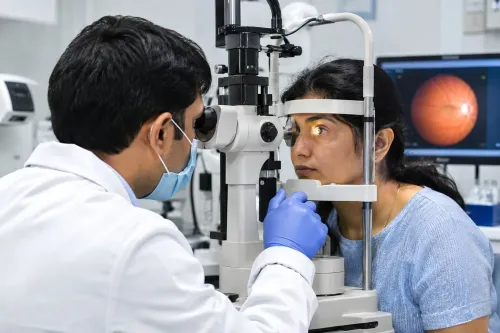
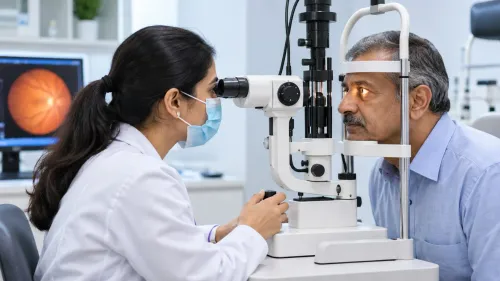
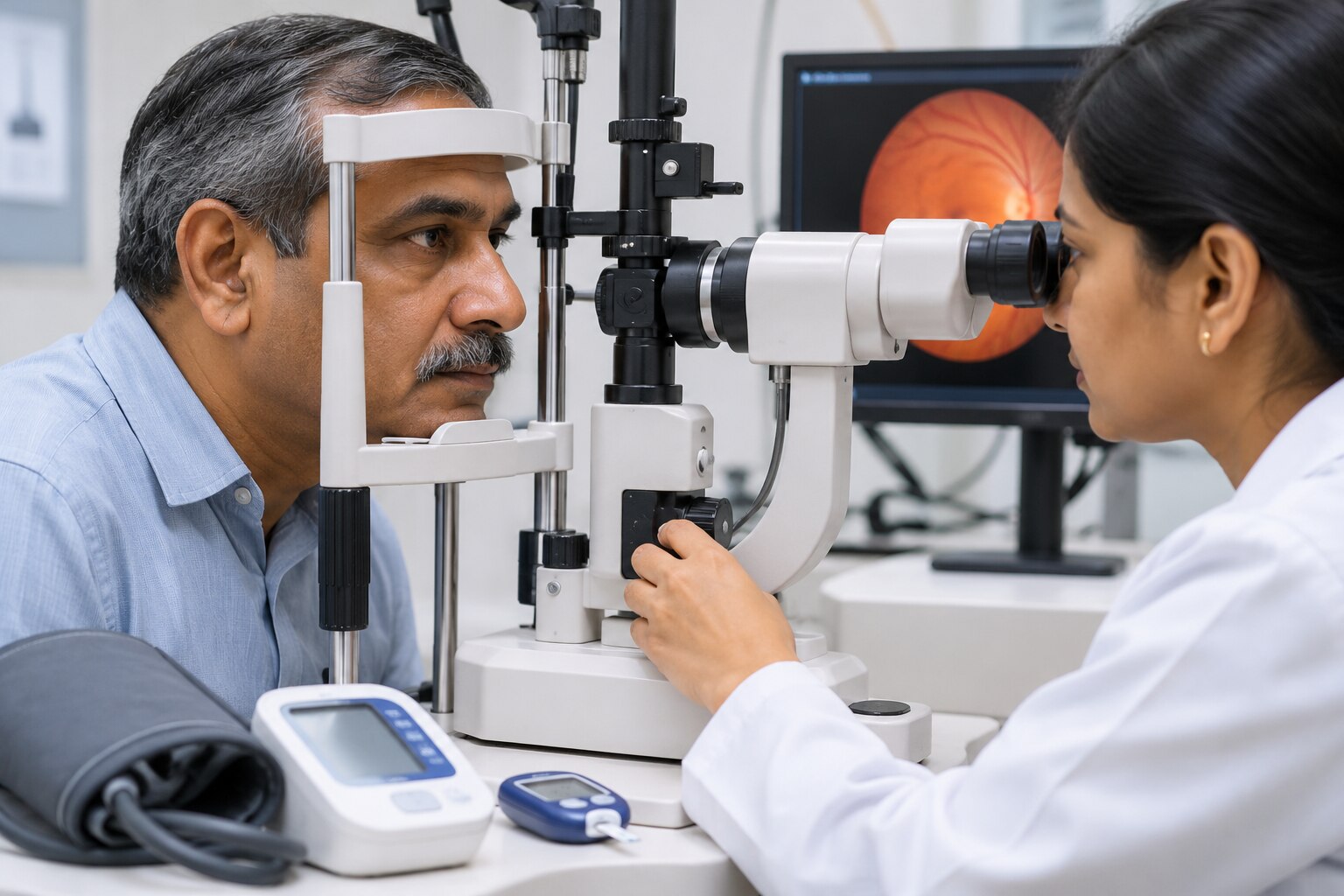
A meaningful appointment combines vision testing, a dilated retinal examination and targeted imaging; visual acuity alone is not an eye screening for diabetic adults. The clinician reviews your diabetes, blood-pressure history and medicines, then checks both eyes for changes.
| Test or examination | What it assesses | What an abnormal result may show |
|---|---|---|
| Visual acuity and refraction | Clarity of vision | Vision loss needing further assessment, not just new glasses |
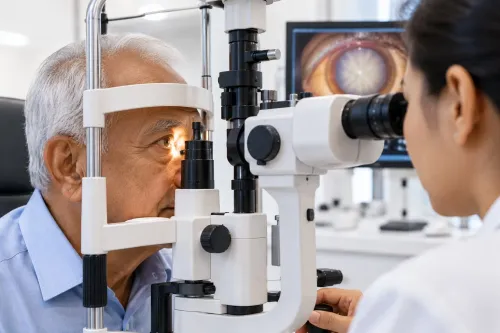
| Dilated fundus examination | Retina, macula, blood vessels and optic disc | Microaneurysms, haemorrhages, cotton-wool spots, exudates, retinopathy or disc swelling |
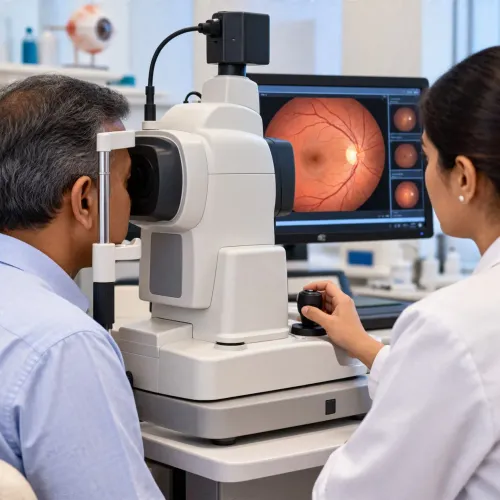
| Digital fundus photography | A documented retinal record | Small changes for comparison and referral |
| Optical coherence tomography (OCT) | Cross-sectional macular structure | Retinal thickening or fluid from diabetic macular oedema |
| Tonometry, optic-nerve examination and visual fields | Glaucoma risk | Raised eye pressure, nerve damage or missing areas of vision |
| Slit-lamp and lens examination | Front of the eye and lens | Cataract or other causes of blurred vision |
| Fluorescein angiography | Retinal blood flow and leakage | Ischaemia or leakage when photographs and OCT do not explain the findings |
A high blood pressure eye check should also record arteriolar narrowing, arteriovenous crossing changes and retinal leakage, not merely eye pressure. Very high blood pressure with optic-disc swelling, widespread haemorrhages or sudden vision change needs urgent medical assessment.
Ask what was found, whether OCT or photographs were performed, and where an abnormal result will be referred.
How to prepare for screening and choose a meaningful assessment in Mumbai
Bring your latest HbA1c result, blood-pressure readings, medication list, previous eye reports, and details of any recent vision change. Bring your glasses or contact lenses too. Arrange transport home if your pupils will be dilated; blurred near vision and light sensitivity can last several hours.
Before booking, ask:
- Will the examination include dilated retinal examination and retinal photographs?
- Is optical coherence tomography (OCT) available to assess macular oedema?
- Will the clinician assess hypertensive retinal signs, the optic disc, and glaucoma risk?
- Who explains abnormal findings, and is there a documented referral plan?
- Should your physician review your blood pressure urgently if readings are very high?
For a diabetes hypertension eye screening in Mumbai, compare the assessment with the actual clinical question:
| Assessment | What it checks | What it cannot replace |
|---|---|---|
| Dilated retinal examination and photographs | Diabetic retinopathy, haemorrhages, exudates, cotton-wool spots, and hypertensive retinal damage | Ongoing diabetes or blood-pressure treatment |
| OCT macula | Retinal swelling and diabetic macular oedema | A complete eye examination |
| Optic-nerve and eye-pressure assessment | Glaucoma risk and optic-disc abnormalities | Diagnosis of every retinal disease |
| Visual-acuity test alone | How clearly you read a chart | Retinal damage that has not yet reduced vision |
A high blood pressure eye check limited to visual acuity or eye pressure is incomplete. Dr Nusrat Bukhari's Eye Clinic is one option to ask about when confirming that dilation, retinal imaging, macular assessment, and follow-up are included rather than assumed.
Related service
Diabetic & Hypertensive Eye Screening Diabetic & Hypertensive Eye Screening by Dr. Nusrat Bukhari Diabetes and high blood pressure can silently damage the eyes long before symptoms appear. With over 21 years of expertise, Dr. View service → |
What screening results mean and when eye care becomes urgent
Treat a normal result as a date, not a discharge. It means sight-threatening retinopathy was not found at that visit; it does not mean diabetes or high blood pressure can no longer harm the retina. The diabetic eye screening benefits increase when you repeat testing on schedule, even with 6/6 or 20/20 vision.
Continue glucose and blood-pressure treatment.
| Result | What it means | What you should do |
|---|---|---|
| Normal | No sight-threatening retinal change was detected at this visit | Keep scheduled screening and medical follow-up |
| Abnormal | Retinopathy, macular oedema, hypertensive retinal damage, or another finding needs assessment | Ask for the written result and referral plan; attend the recommended eye appointment |
| Uncertain | The photograph is ungradable, incomplete, or does not show the macula clearly | Do not treat it as normal; arrange a dilated examination by an eye-care professional |
For diabetic adults, high blood pressure eye screening benefits depend on more than visual acuity or eye-pressure measurement. The assessment should include retinal screening, macular-oedema evaluation, hypertensive retinal assessment, and documented referral for abnormal findings.
Seek urgent assessment rather than routine screening if you have:
- Sudden or rapidly worsening vision loss
- A curtain or shadow, new flashes, or a sudden shower of floaters
- Severe eye pain, marked redness, halos, nausea, or vomiting
- Very high blood pressure with headache, vision change, confusion, weakness, or chest pain
- Optic-disc swelling or extensive retinal haemorrhages, cotton-wool spots, or exudates reported during an examination
Frequently asked questions
Why do diabetes and high blood pressure together increase eye risk?
High glucose damages small retinal vessels, while high blood pressure strains them. Together, they increase the risk of leakage, blockage, bleeding, and retinal oxygen loss.
Who needs diabetic and hypertension eye screening, and when should it be repeated?
Adults with diabetes need a retinal examination after diagnosis, with repeat timing based on retinal findings, diabetes duration, pregnancy, glucose control, and blood pressure. Your eye specialist sets the interval.
What happens during a diabetic and hypertension eye screening appointment?
The appointment can include visual acuity testing, eye-pressure measurement, pupil dilation, and a retinal examination. Optical coherence tomography or retinal photographs may be added when the clinician needs closer assessment.
How should you prepare for an eye screening appointment in Mumbai?
Bring your medication list, diabetes and blood pressure records, previous eye reports, and glasses. Ask whether your pupils will be dilated, arrange transport if bright light or blurred near vision will affect you, and choose a clinic that offers retinal imaging and specialist review.
When do screening results require urgent eye care?
Seek urgent assessment for sudden vision loss, new flashes, a sudden increase in floaters, a curtain-like shadow, severe eye pain, or marked redness. Do not wait for a routine screening appointment.
Keywords